LIVING TOGETHER
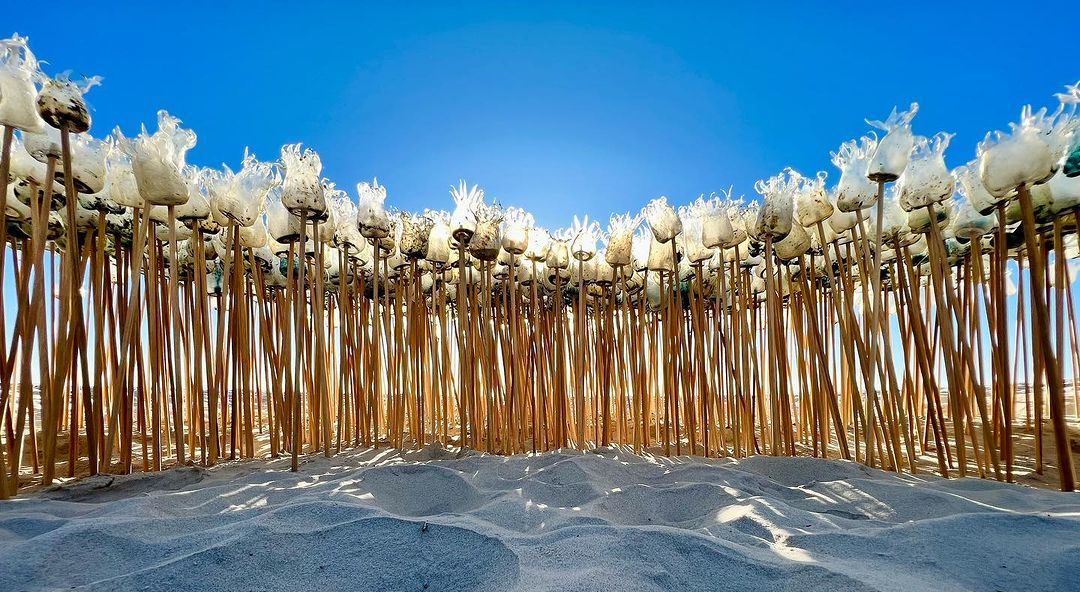
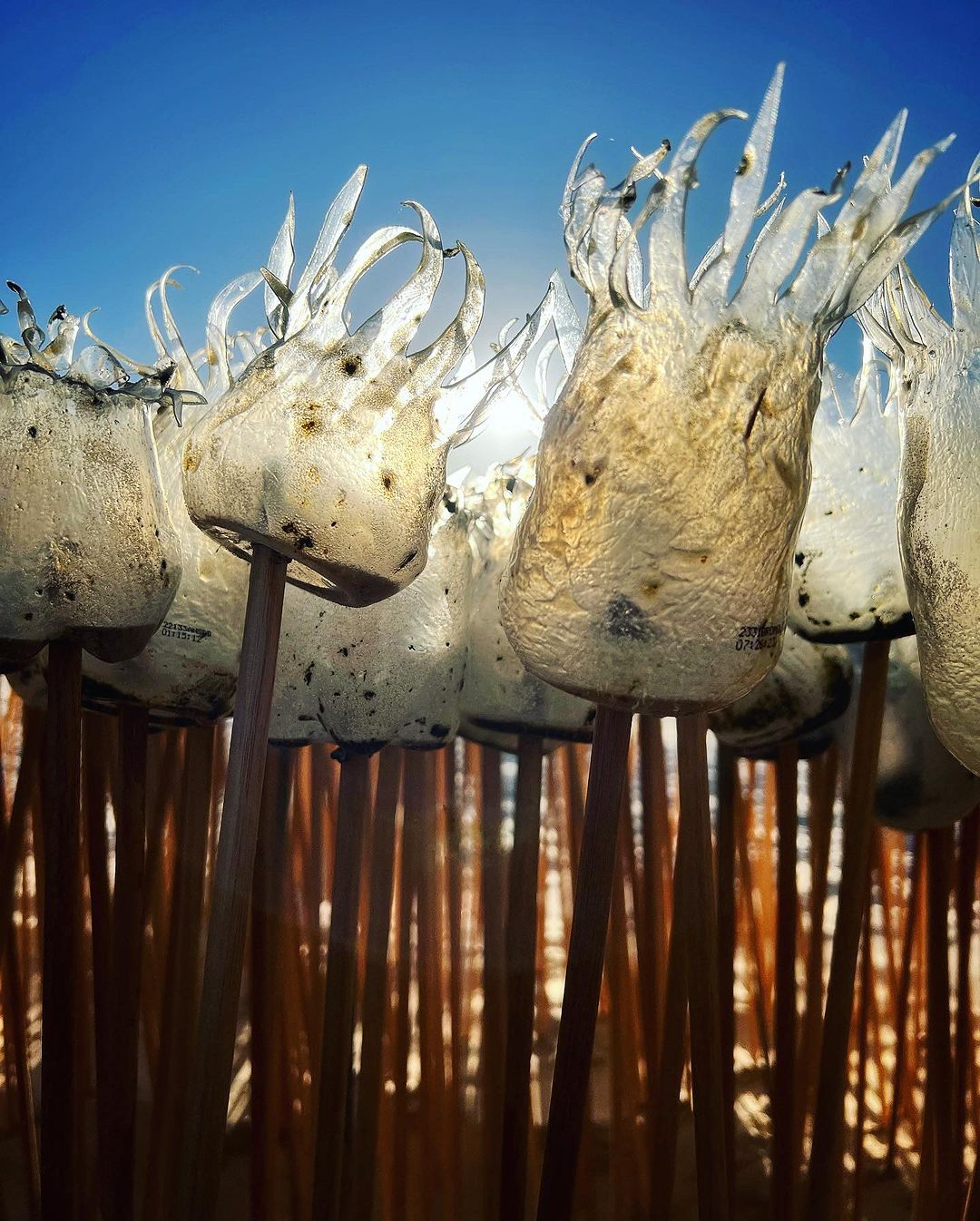
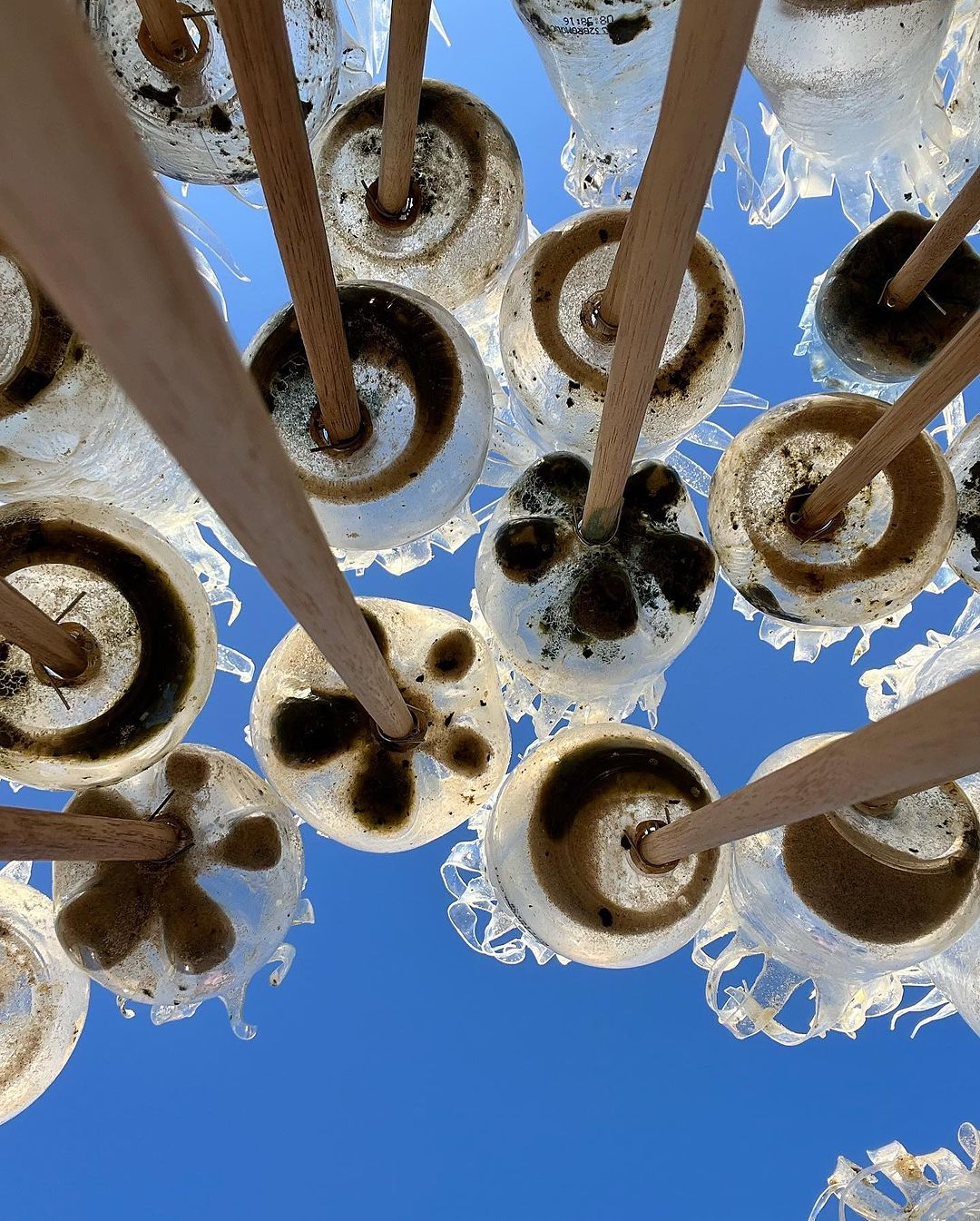
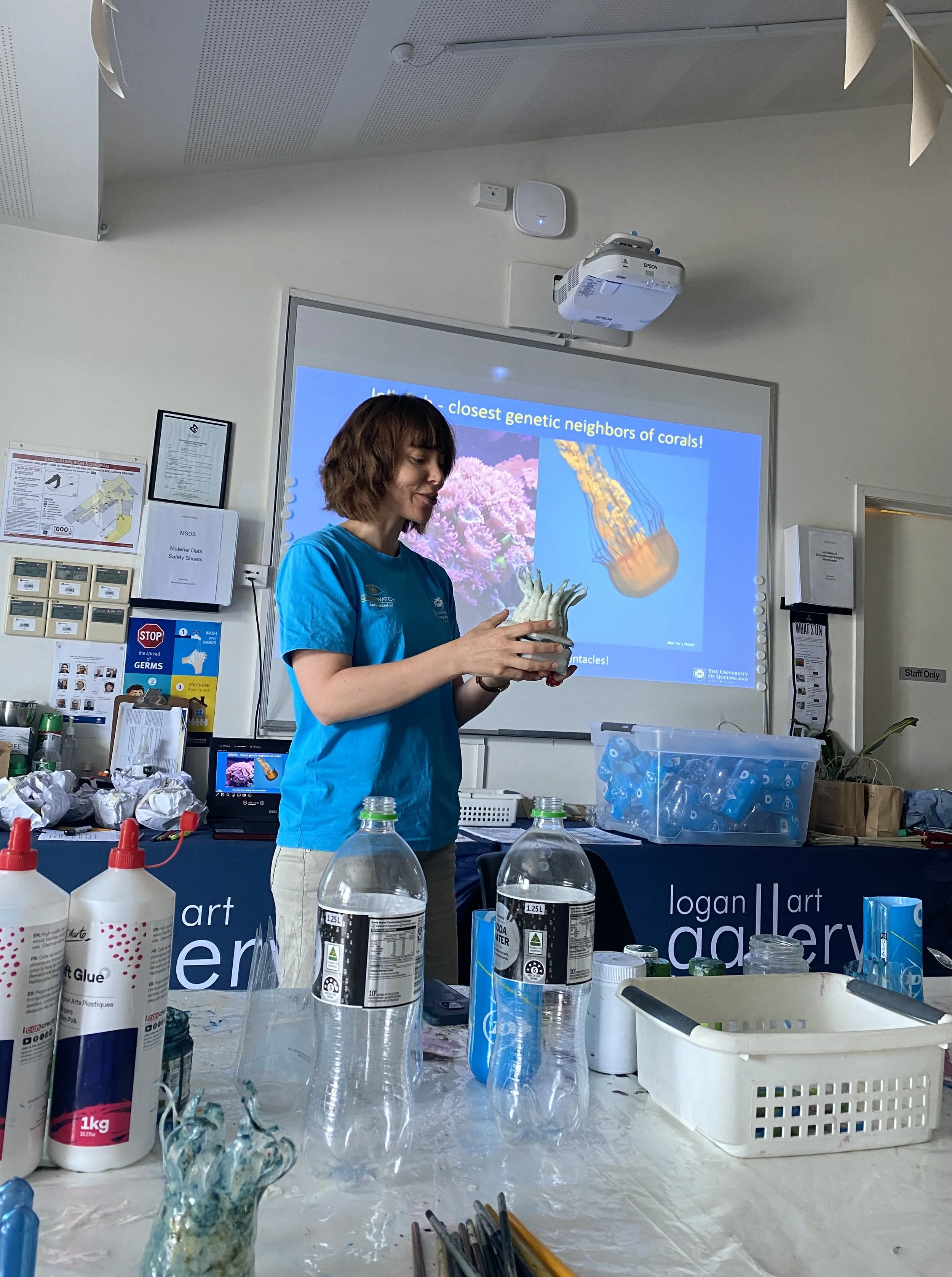
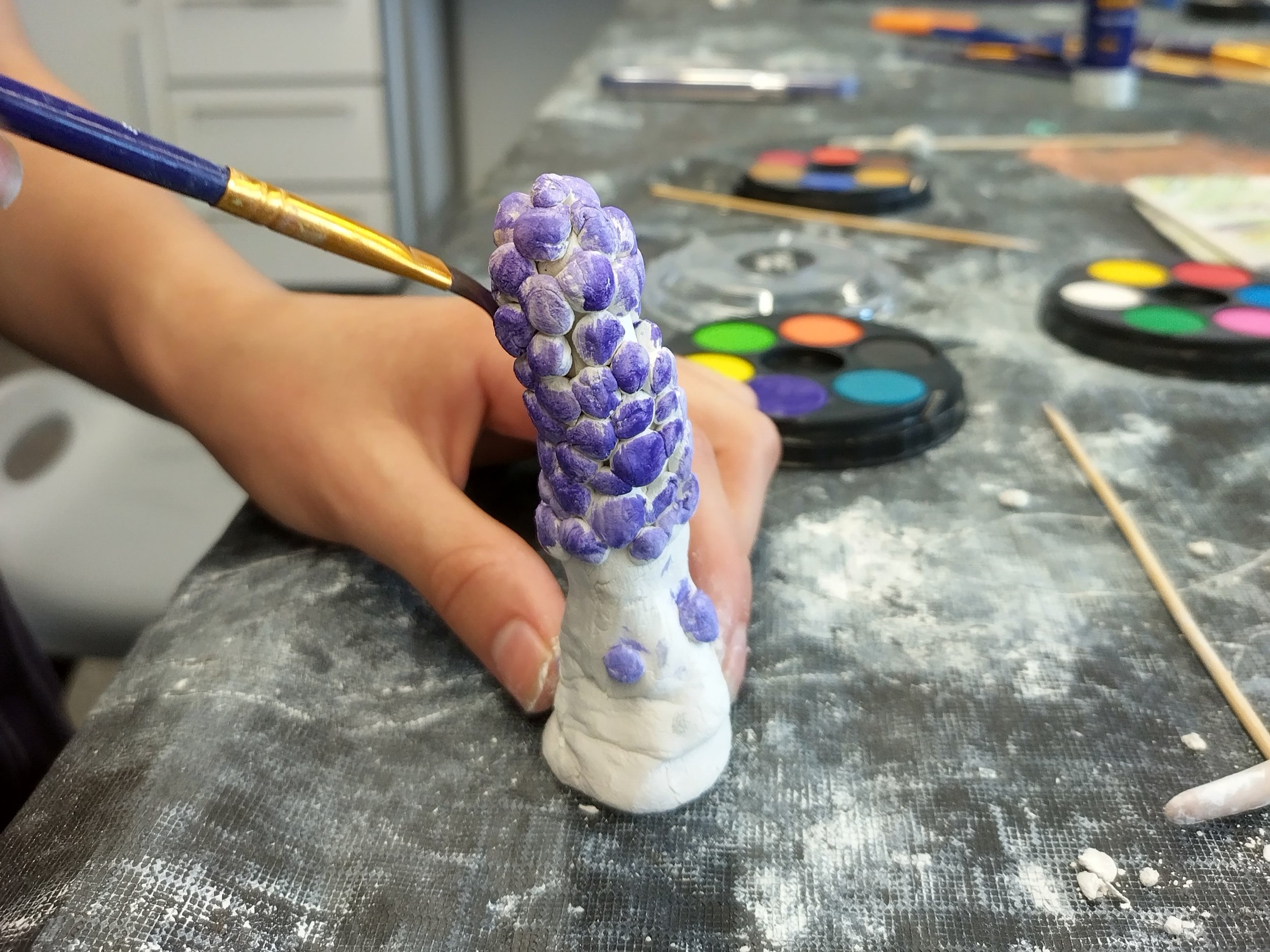
Living Together is an ephemeral homage to symbiosis, a biological relationship found in corals. Embodying a colony of larger-than-life coral polyps, forms are made by sculpting waste polyethylene with heat, water and sand. An algal pigment is applied which fades over time through exposure to sunlight, just as corals lose colour when their symbiotic algae is expelled.
Nature is resilient, however mass bleaching events are increasing in frequency due to climate change. Polyp vessels symbolise the latent potential inside each of us to foster mutually beneficial relationships between ourselves and the more-than-human world.
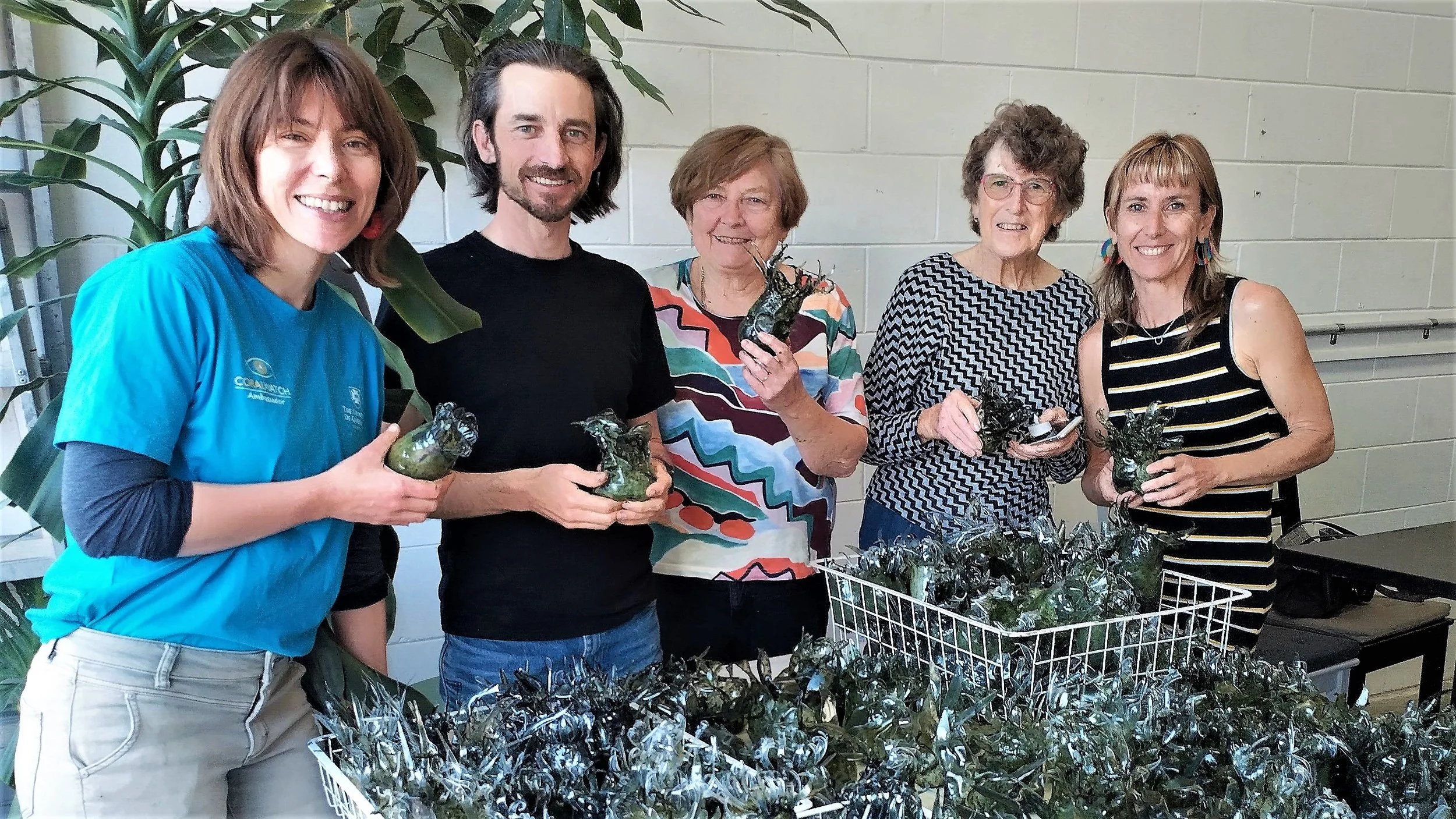
Sculptures have been made in a series of community workshops with over 700 people across Queensland - from Logan and Brisbane, and up north to Heron Island.
Image credit: Child painting algae onto plastic coral polyp. University of Queensland



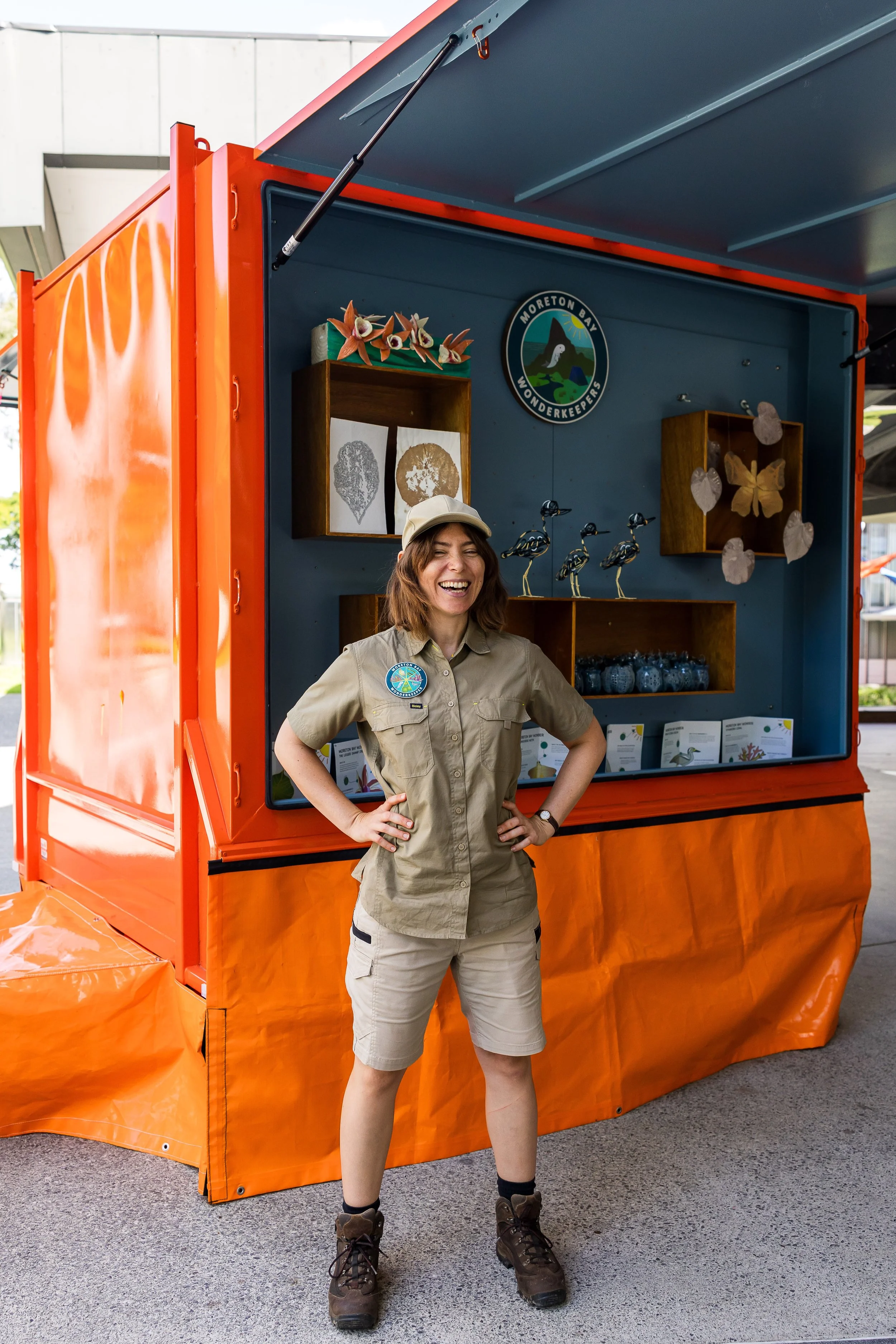
The Wonderkeepers
Seven natural Wonders from our native plant and animal kingdoms are waiting to be discovered. Become a Wonderkeeper and help keep Wonder alive and thriving in Moreton Bay. Which Wonder will you choose, and how will you care for your Wonder, now and in the future?
The seven Wonders:
Beach Stone Curlew
Dugong
Long-finned Eel
Macaranga
Staghorn Coral
Swamp Orchid
Transverse Moth
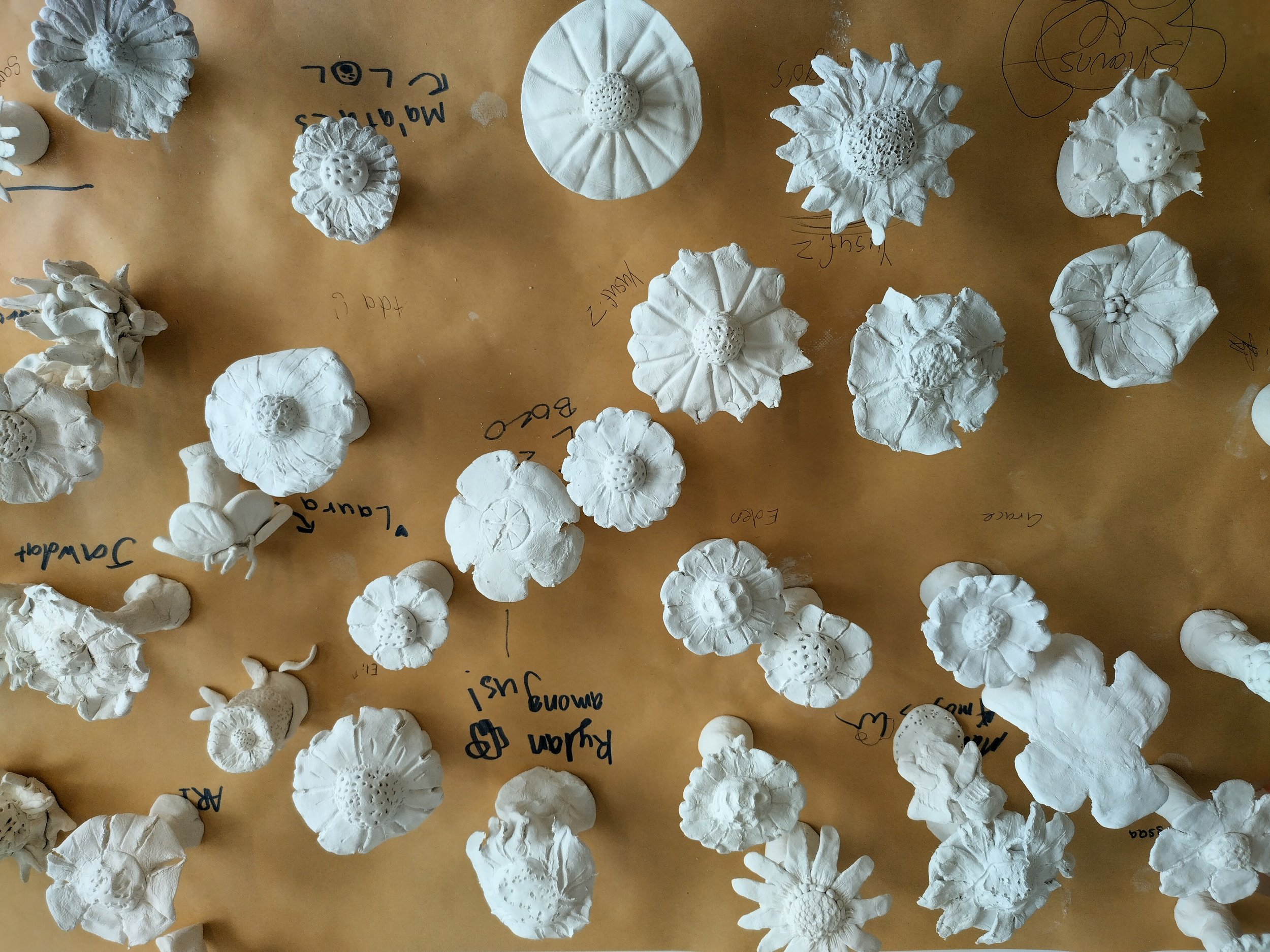
Be inspired by artworks made by artists Dylan Bolger, Norton Fredericks, Kuweni Dias Mendes, Nadine Schmoll, Russell Solomon and Debbie Taylor Worley to create your own Wonder-filled clay artwork to add to the collection or to take home.
Commissioned by Moreton Bay Regional Council, this activation pops up across Moreton Bay at various locations, including school holidays at the Moreton Bay Environmental Education Centres, Ecofest and Plant-a-palooza.
S.T.E.A.M Workshops:
Fusing Visual Art and Electronics
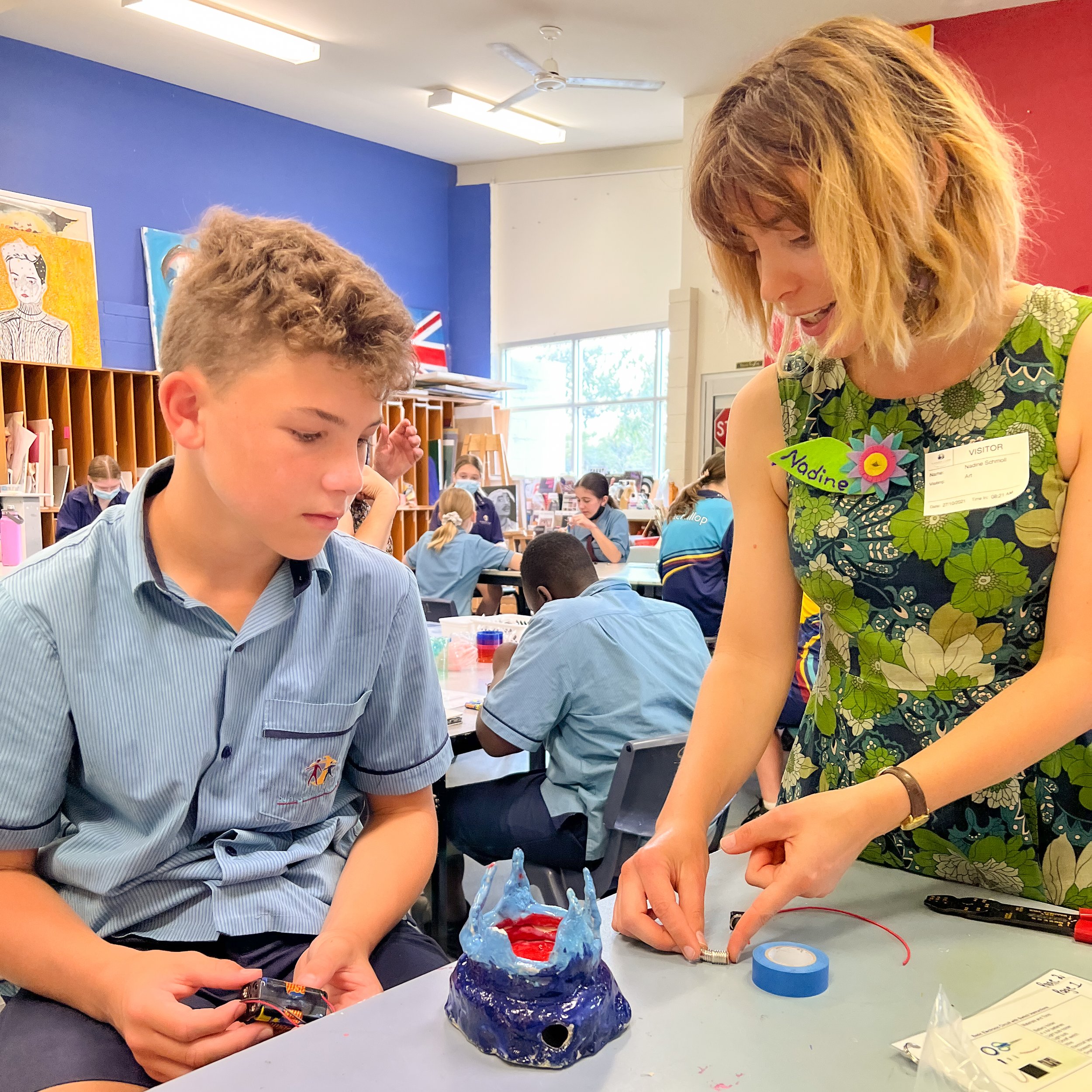
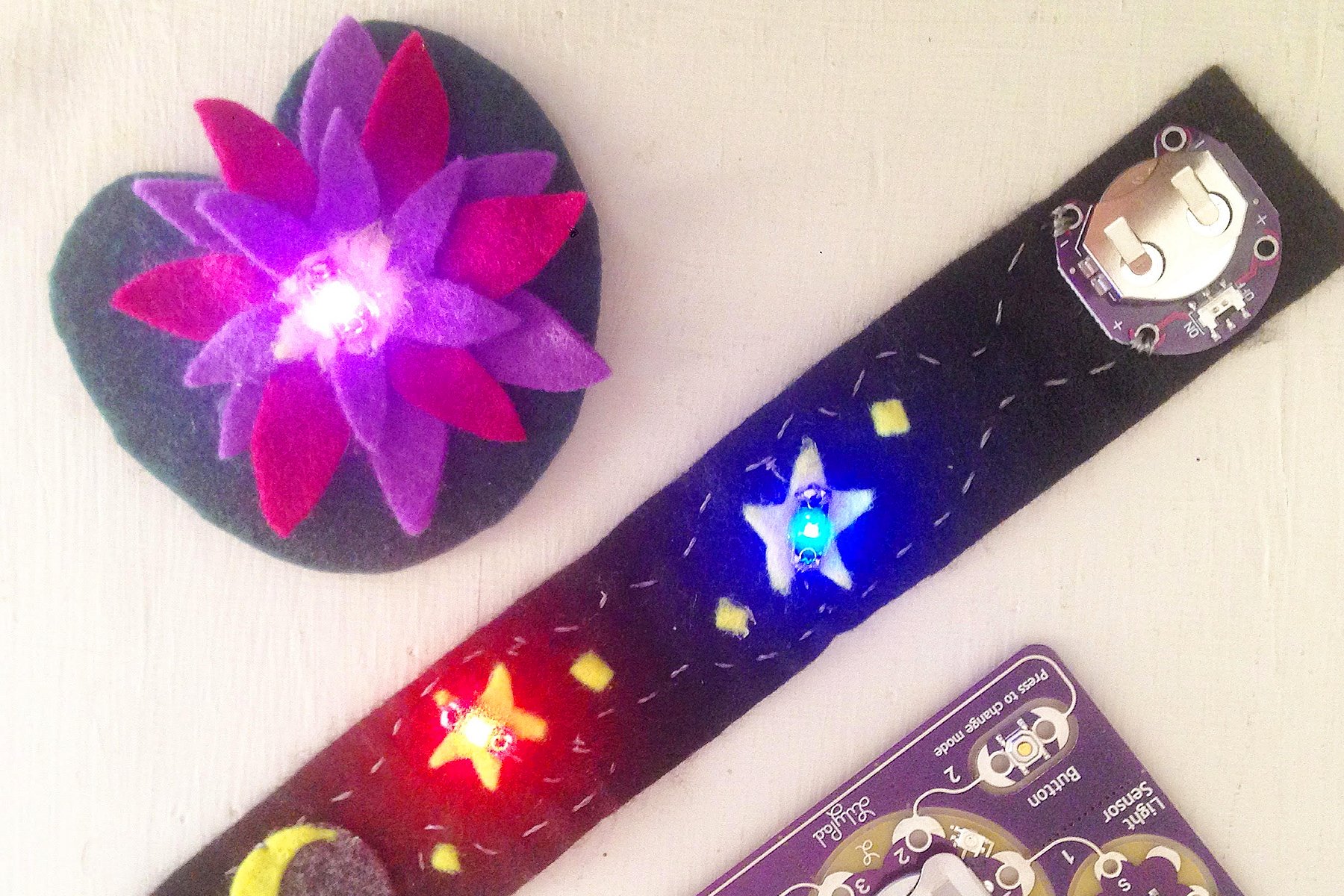
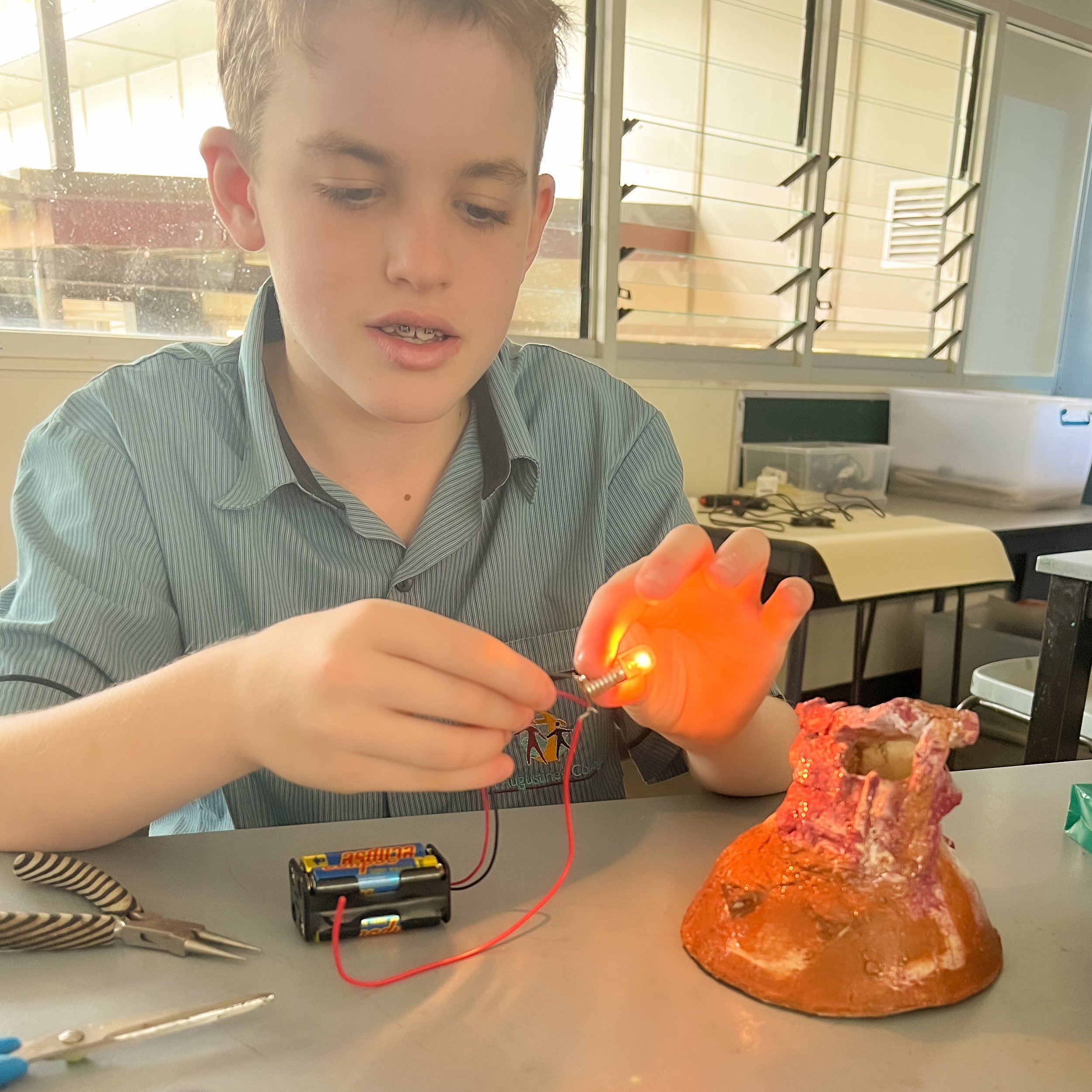
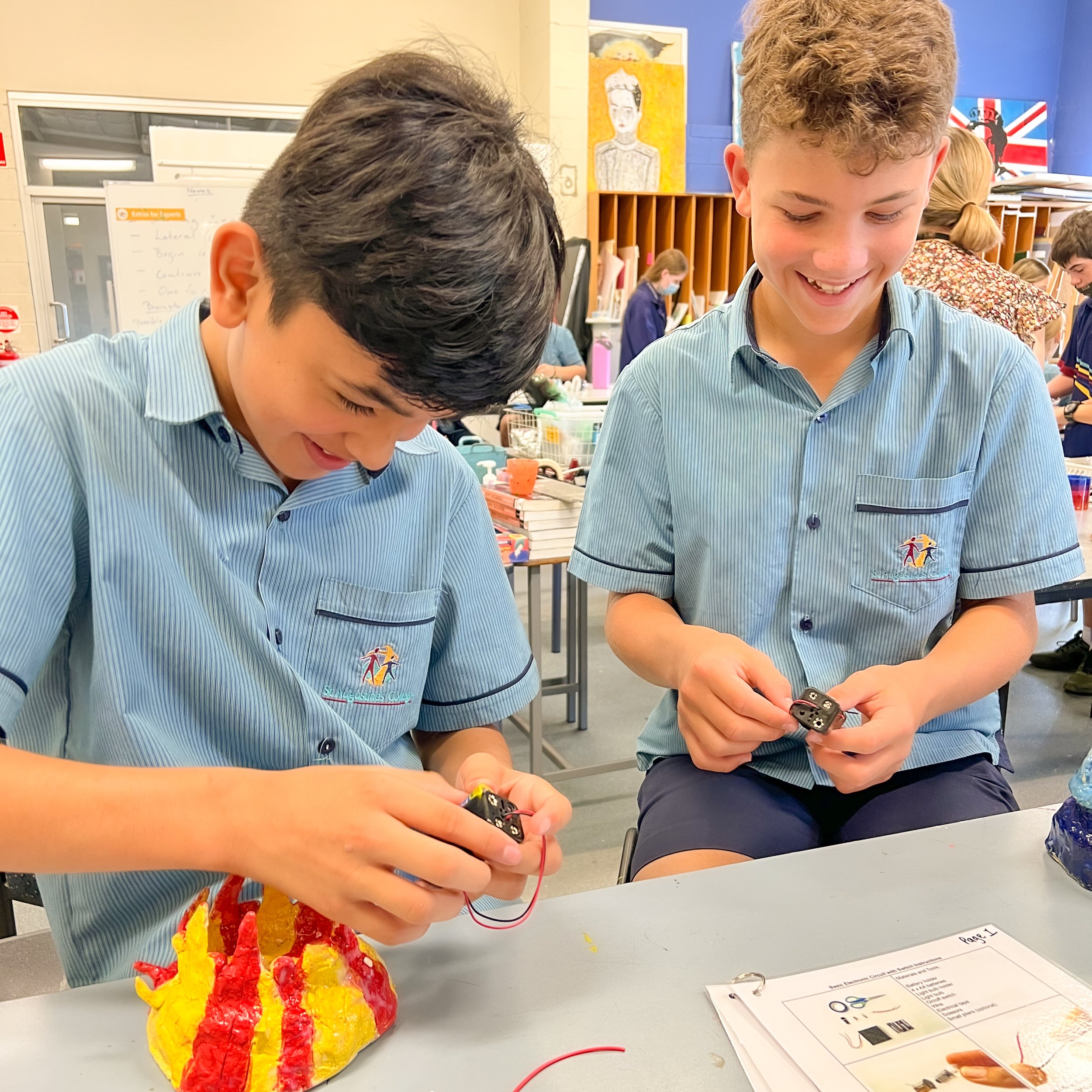
A series of projects with secondary students exploring interdisciplinary learning through the Visual Arts, Design, Fashion and Science by creating a simple electronic circuit and applying it to a sculpture or piece of wearable art. Participants received an electronics kit with a power source and battery holder, light source and conductive wire or thread.
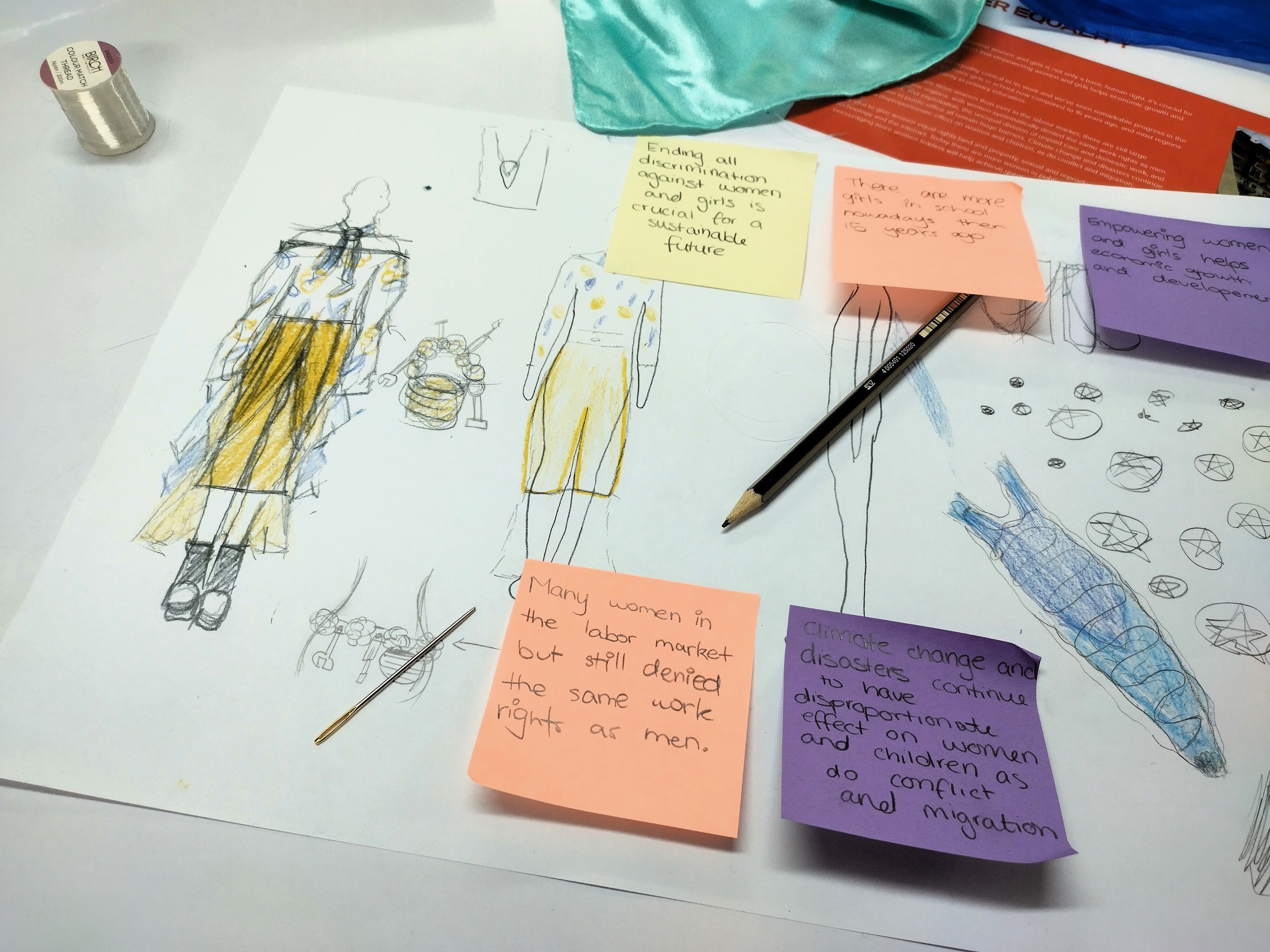
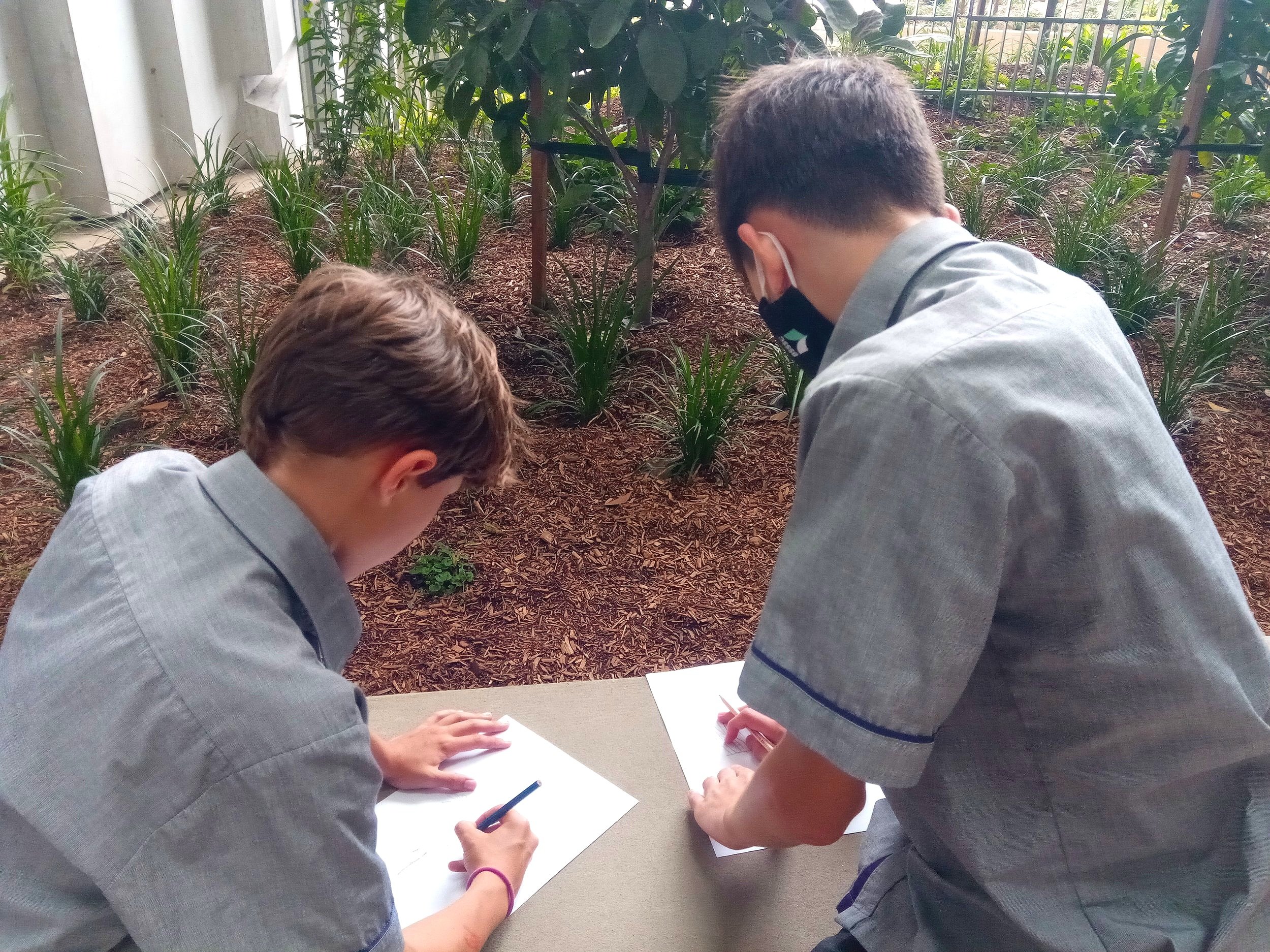
School photos: St Augustine’s College, two projects with Year 7 Visual Arts students making wearable circuits and S.T.E.A.M Night Light.
bsssc artist in residence
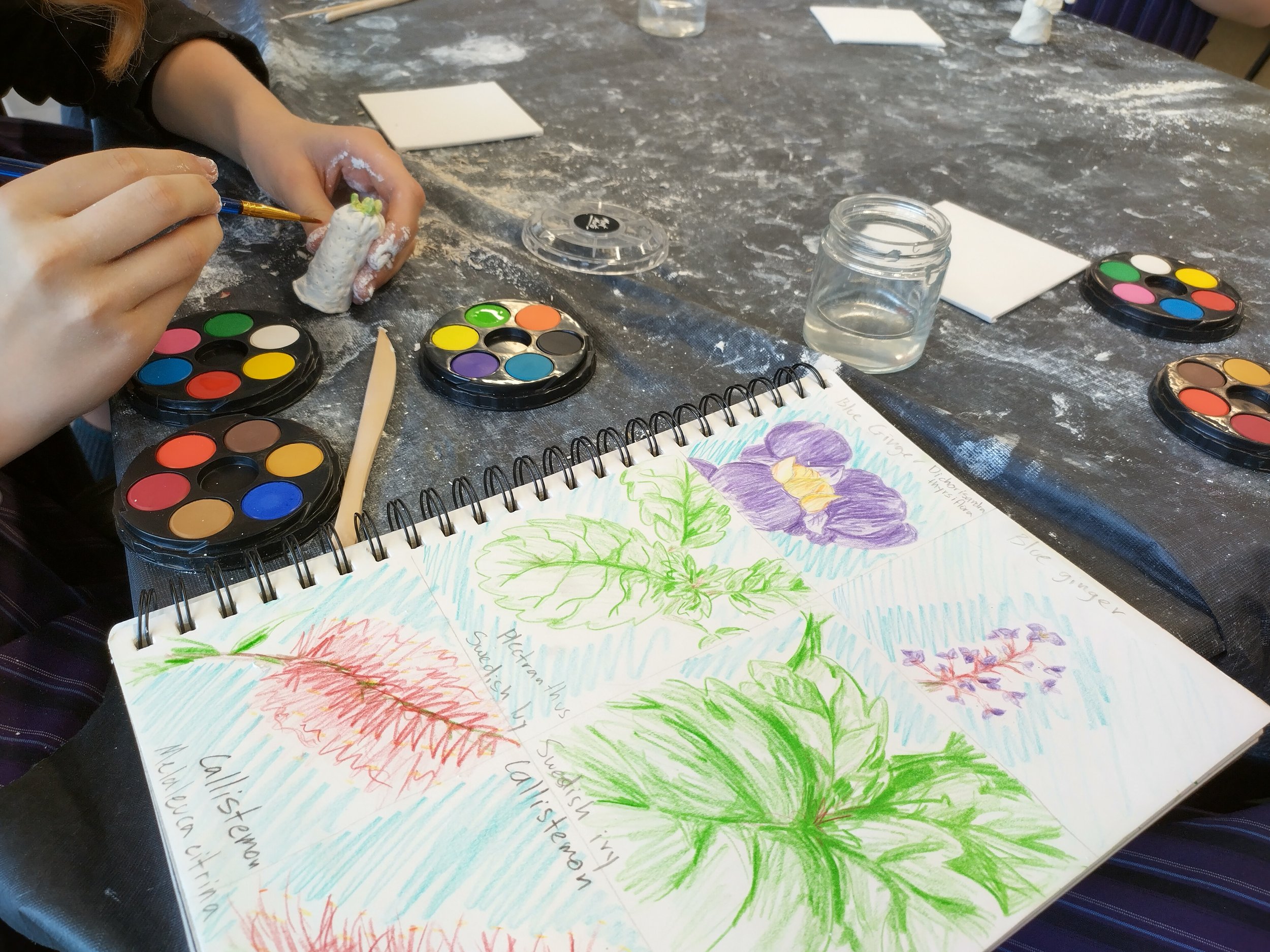
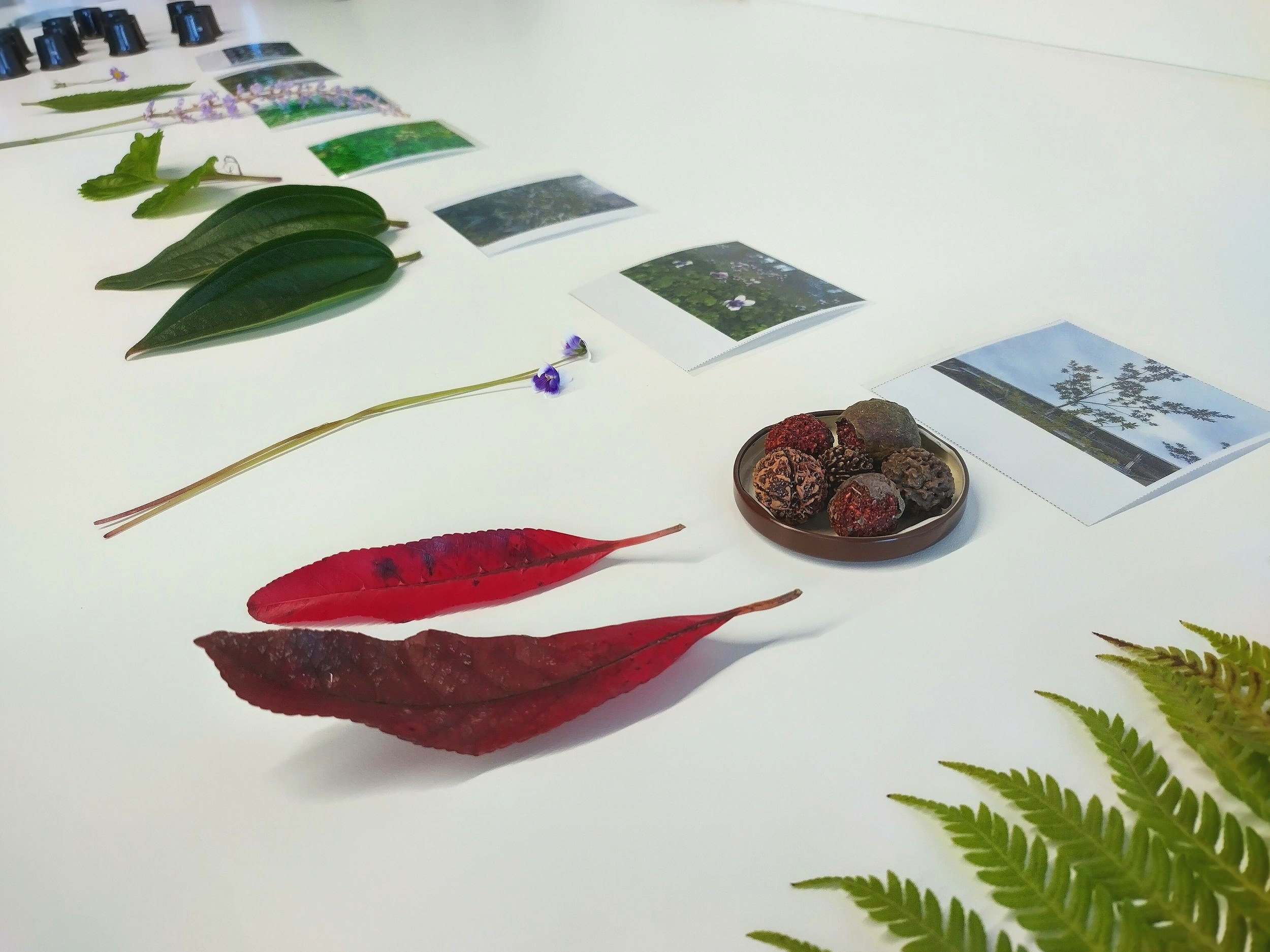
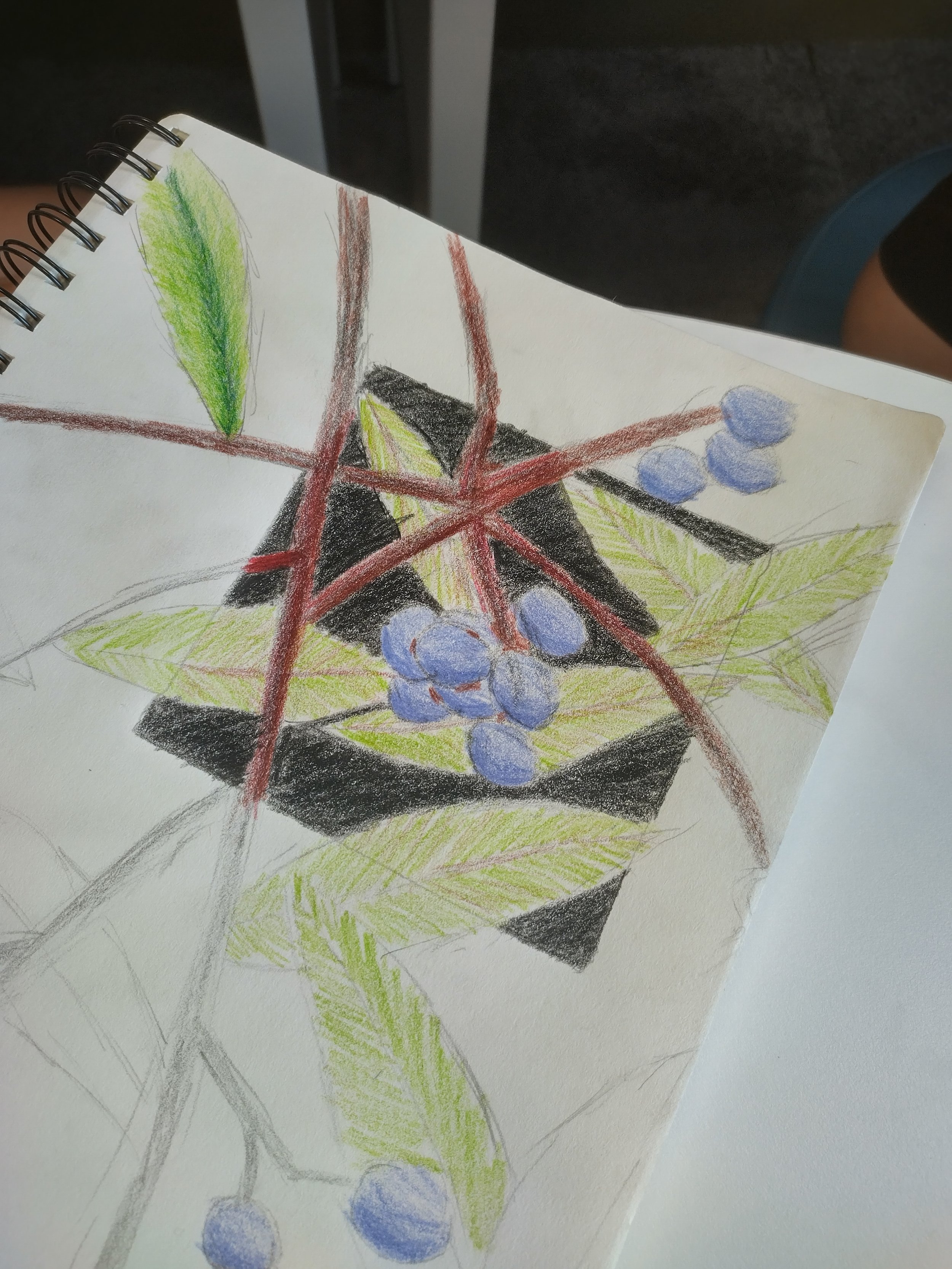
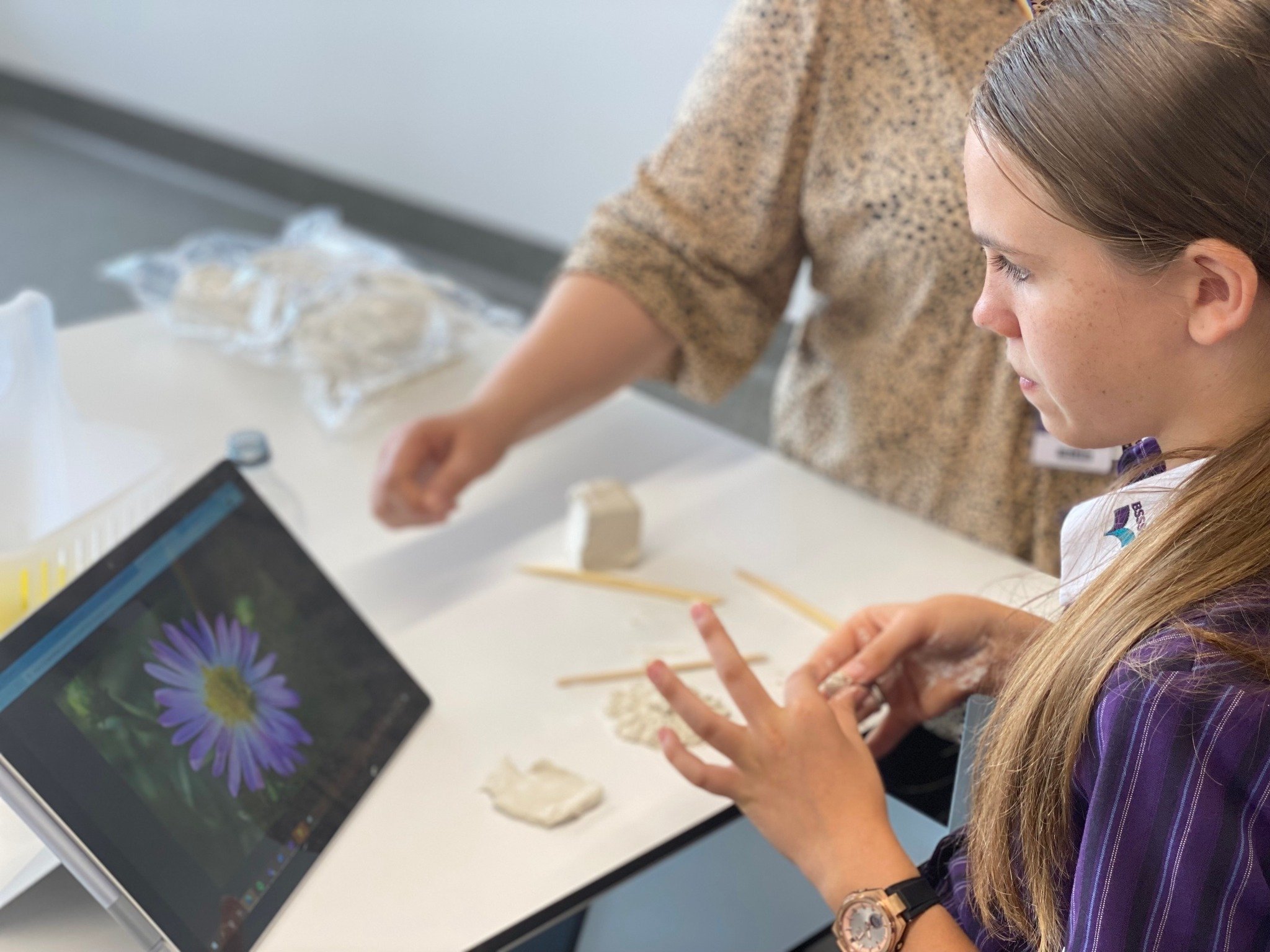
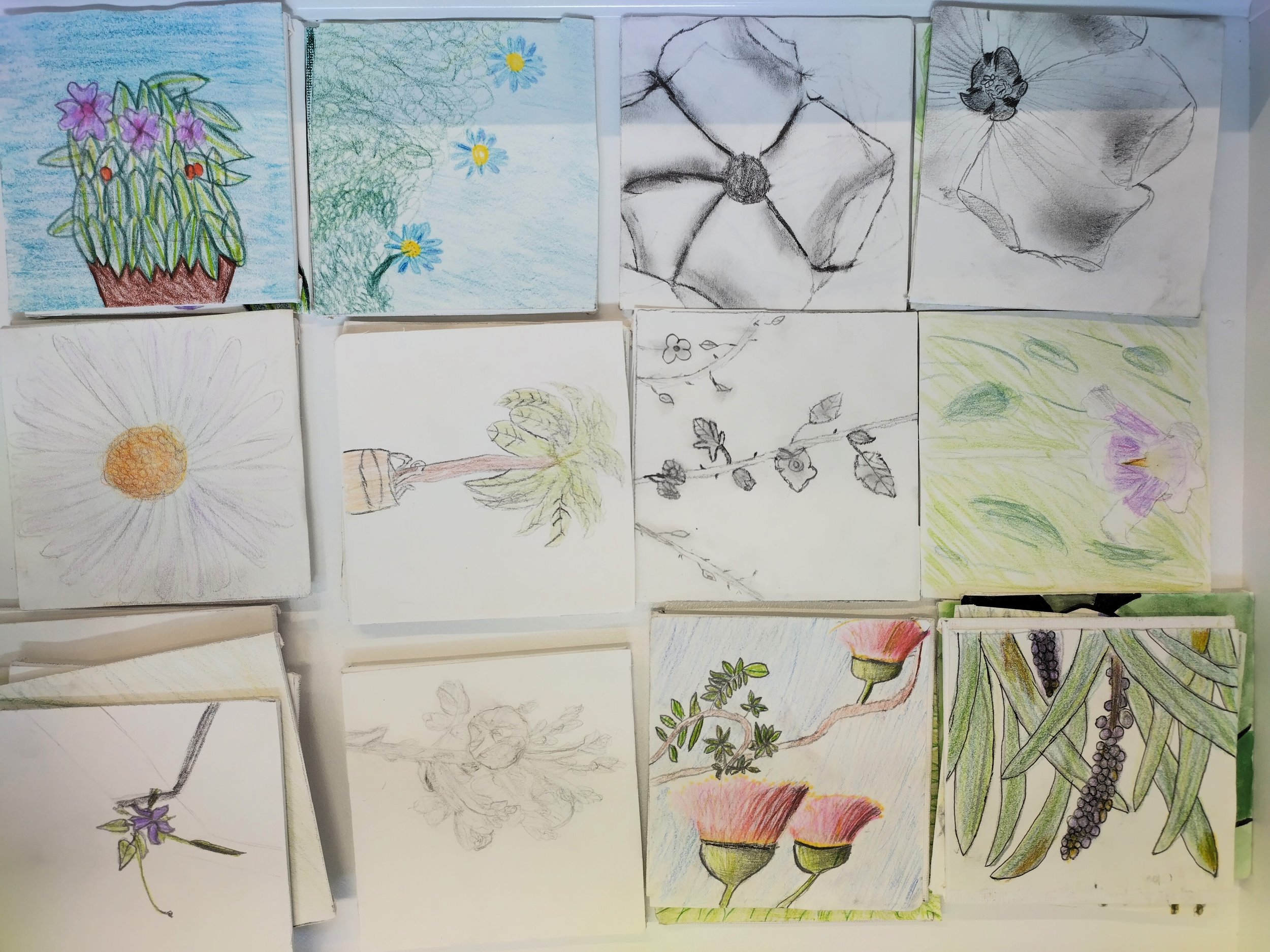
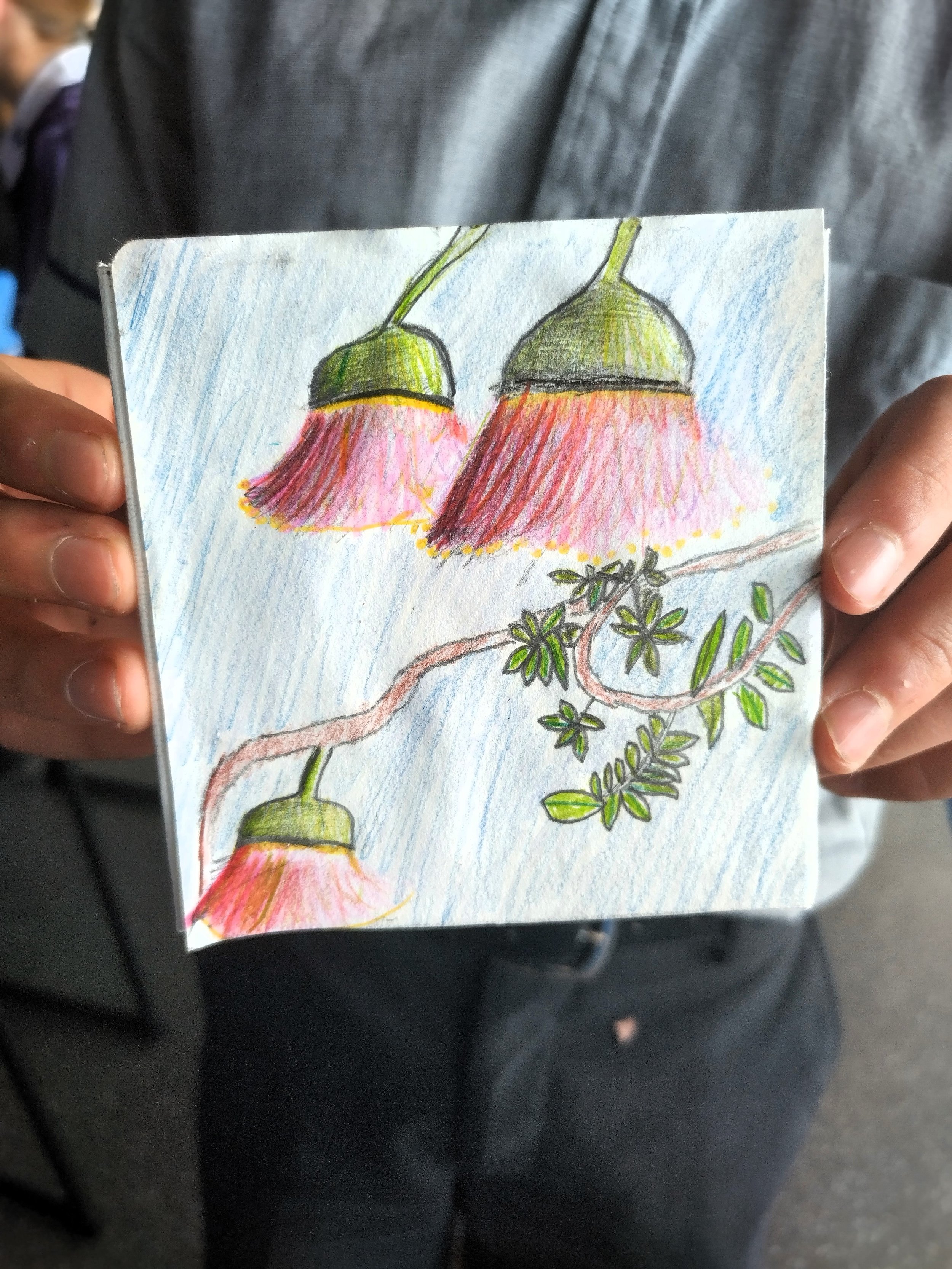
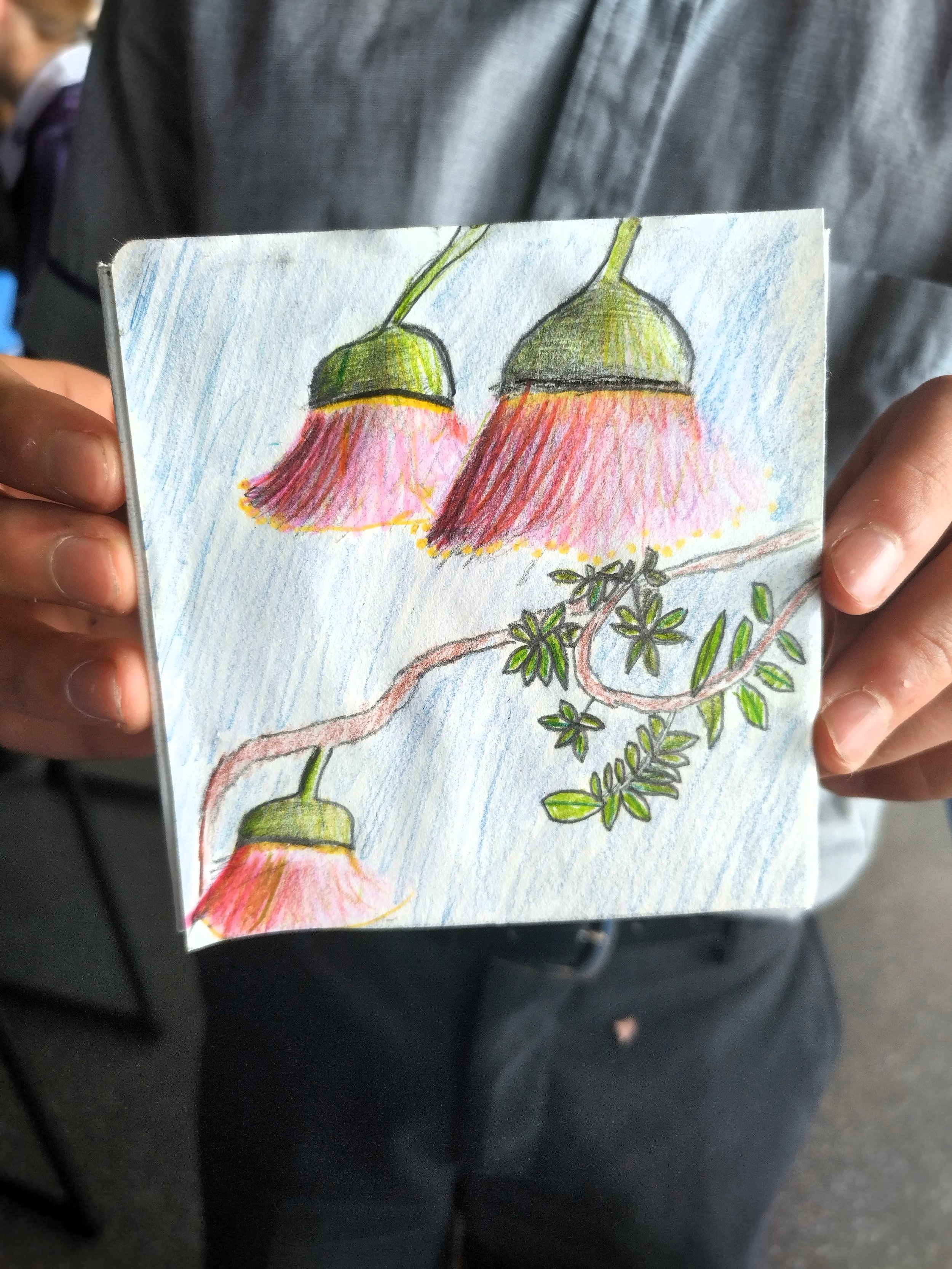
Nadine collaborated with Head of Department Renae Place to create a Visual Arts unit that combined art and science by cultivating a sense of wonder and curiosity for the natural world. Students in years 7-8 honed their observation skills by drawing en plein air and familiarising themselves with the native plants in their local area. The unit included experimentation with drawing and painting techniques, clay and plastic sculpture.
Curiosity Brisbane:
Queensland Schools Challenge
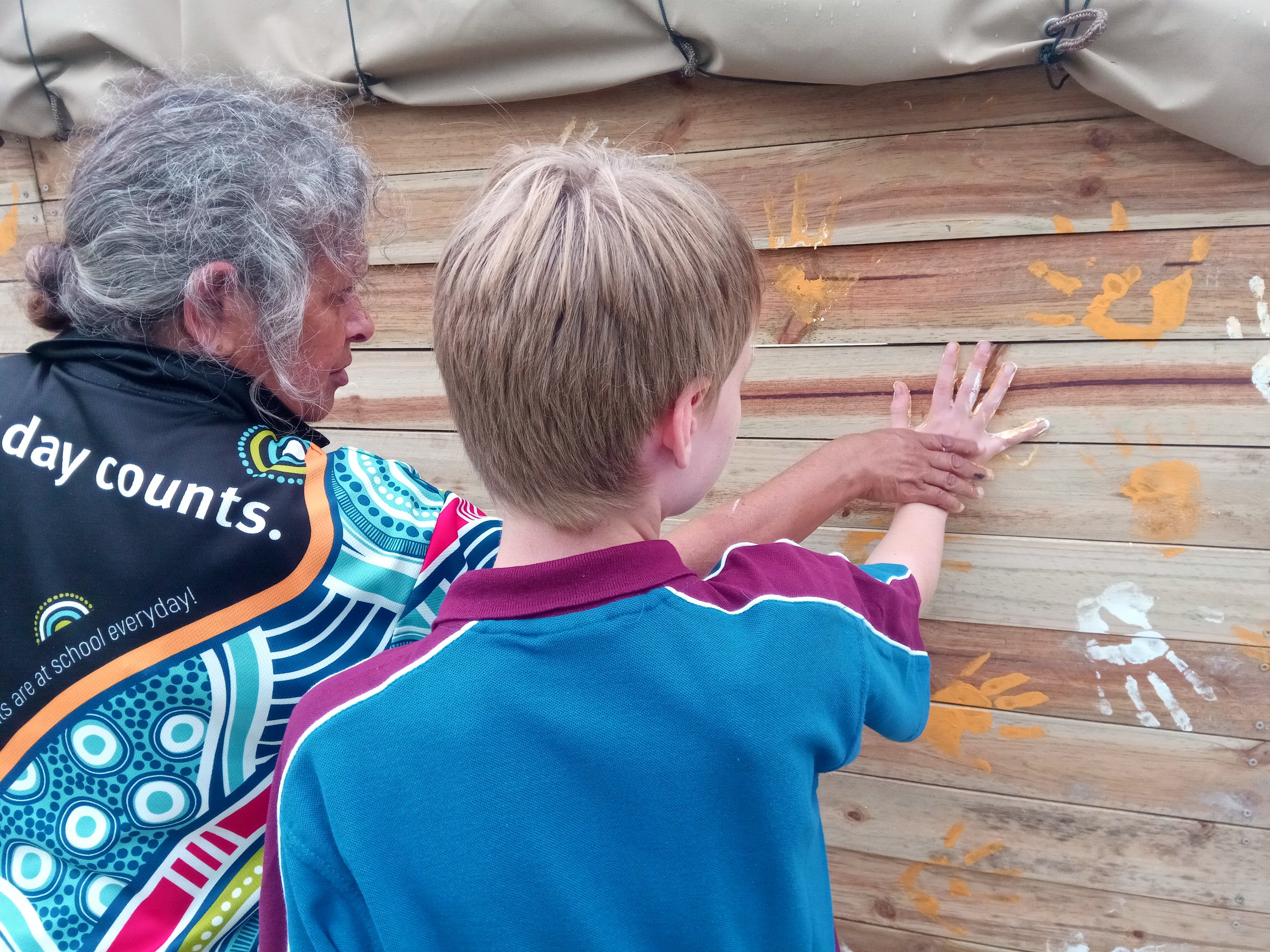
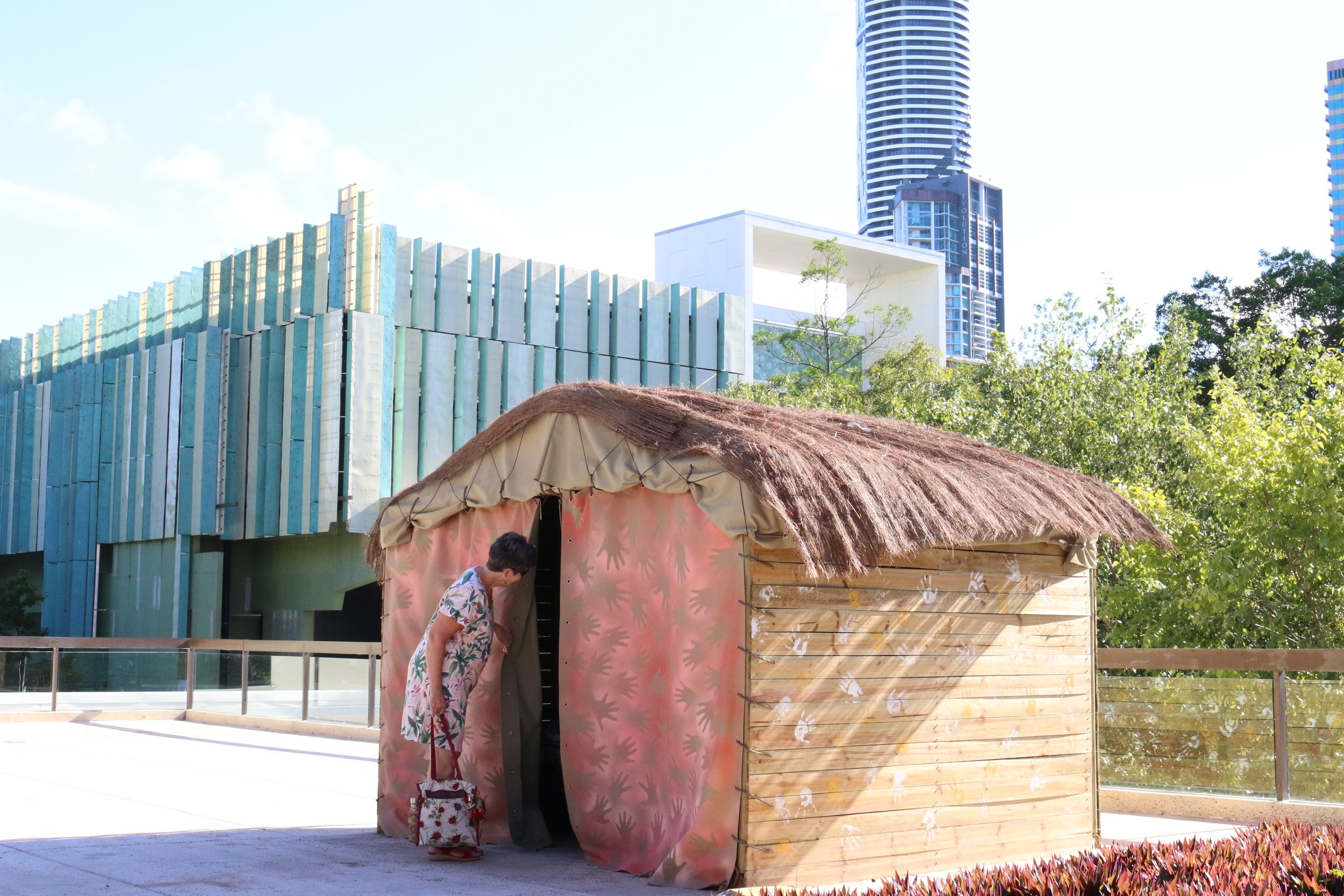
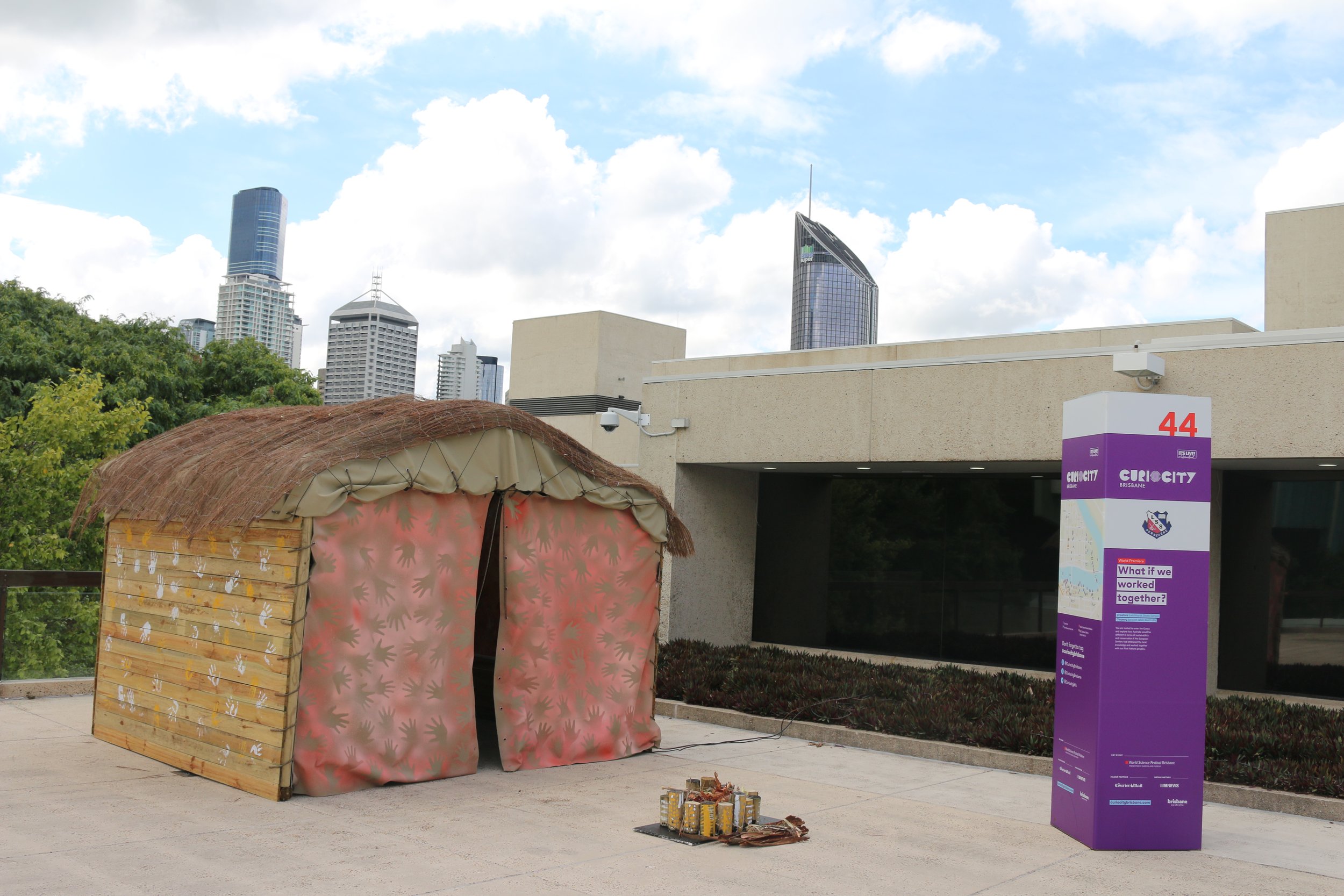
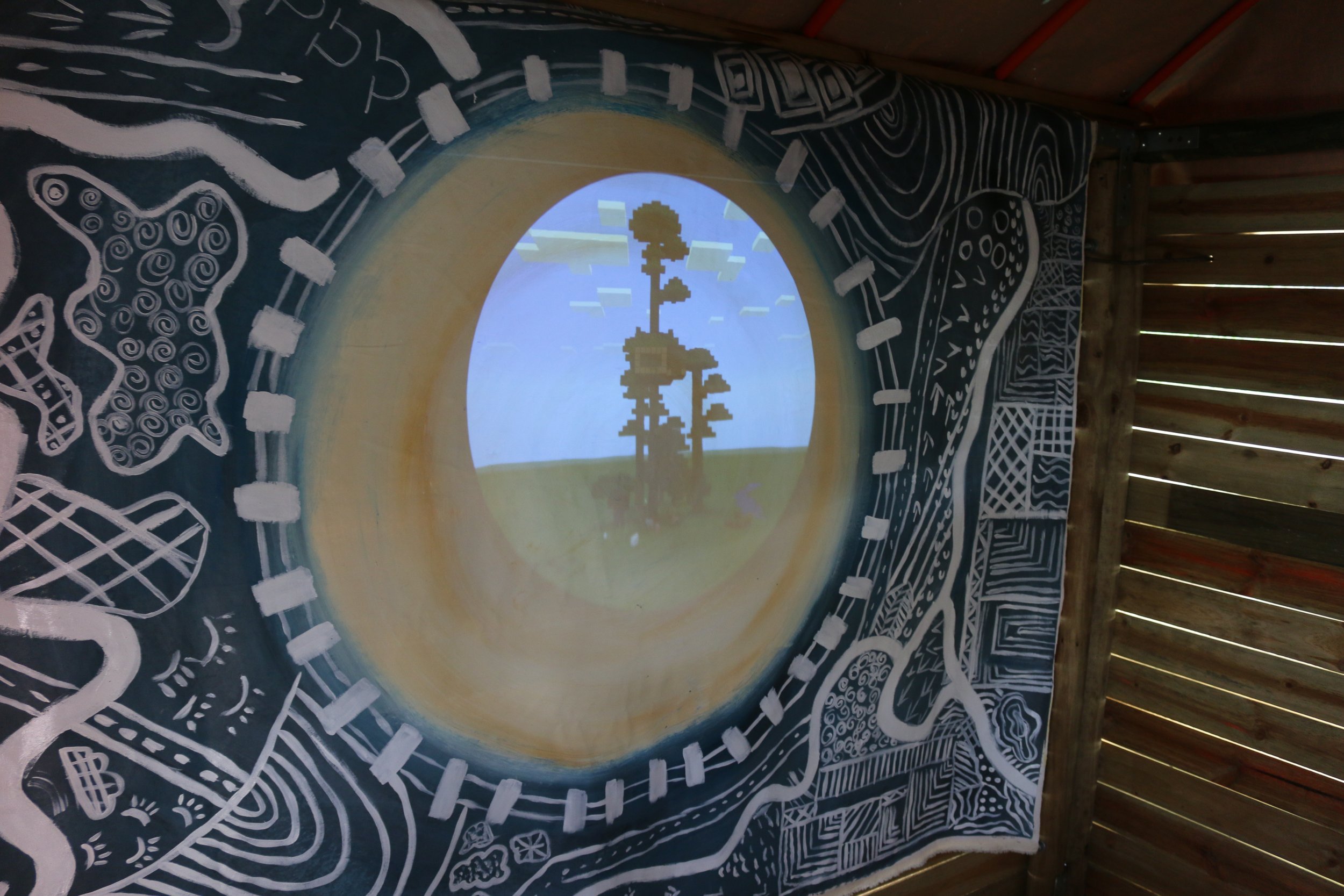
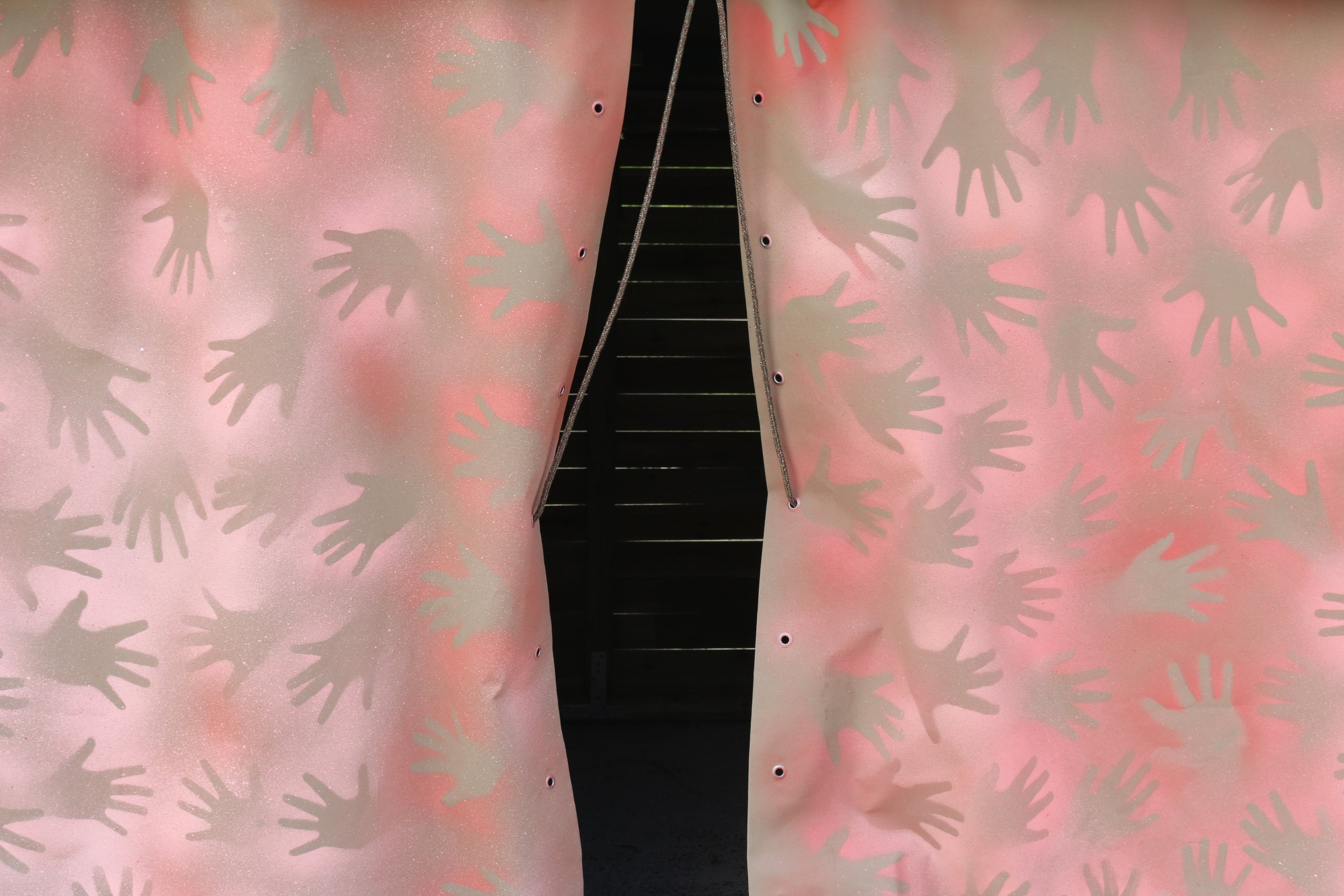
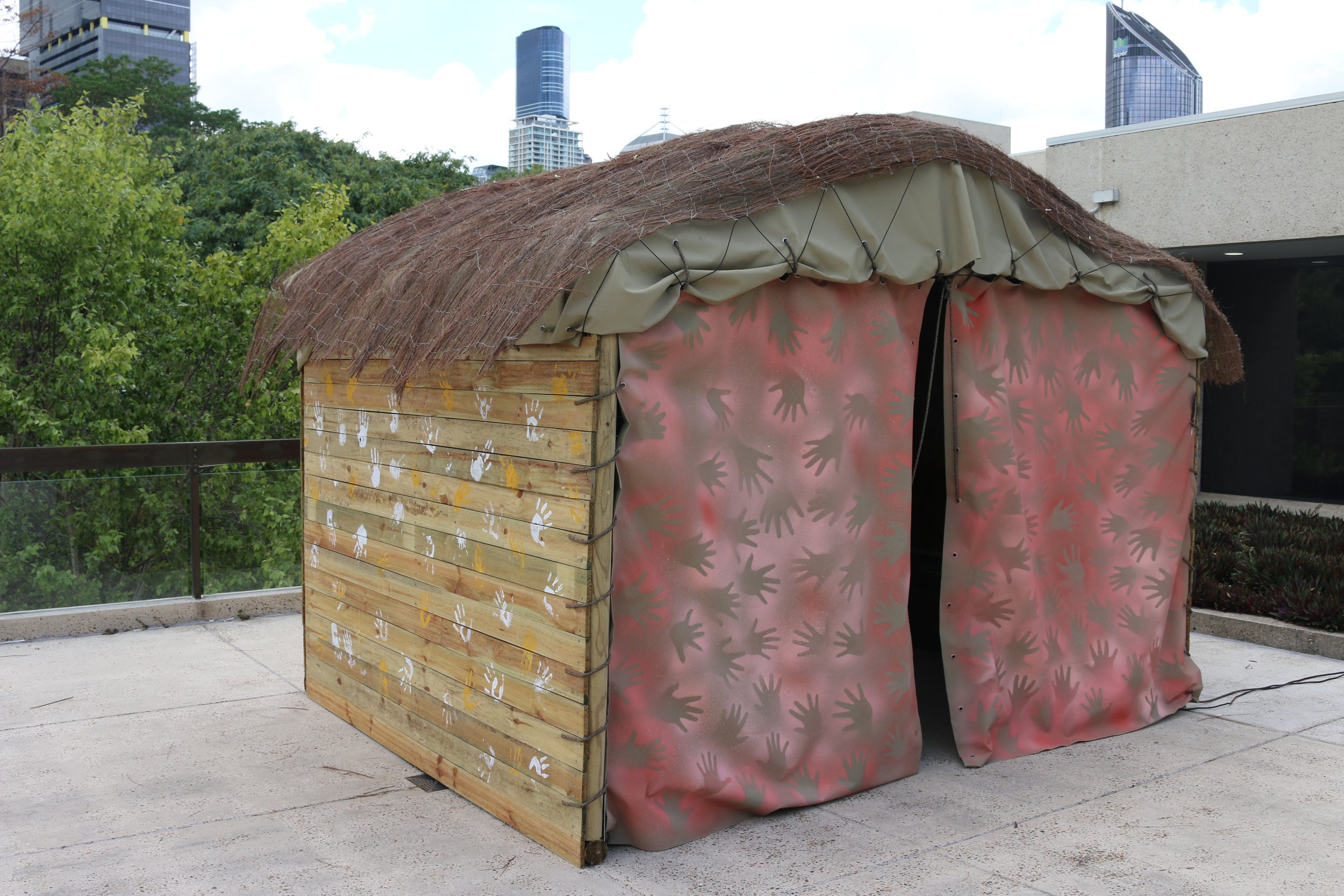
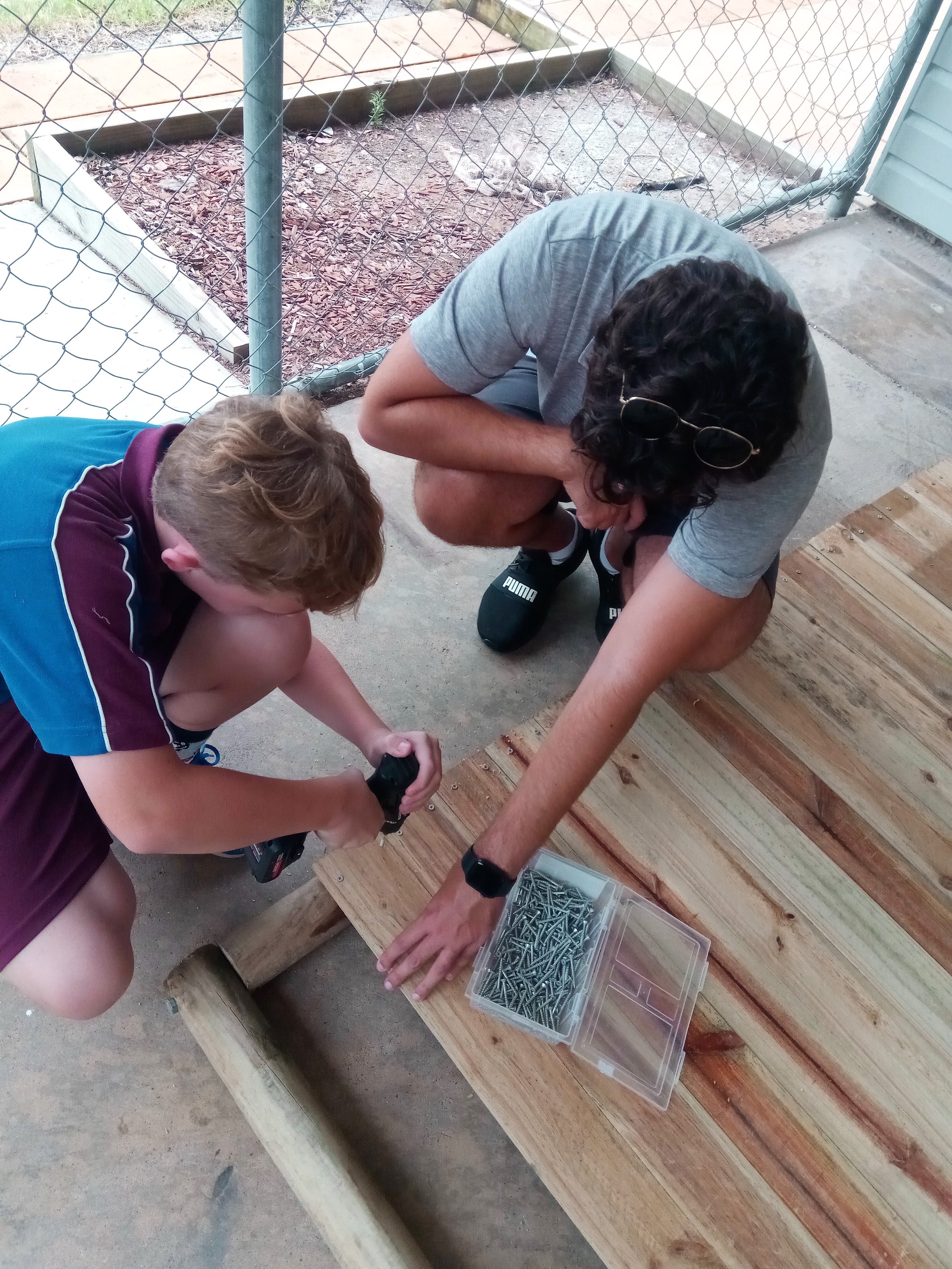
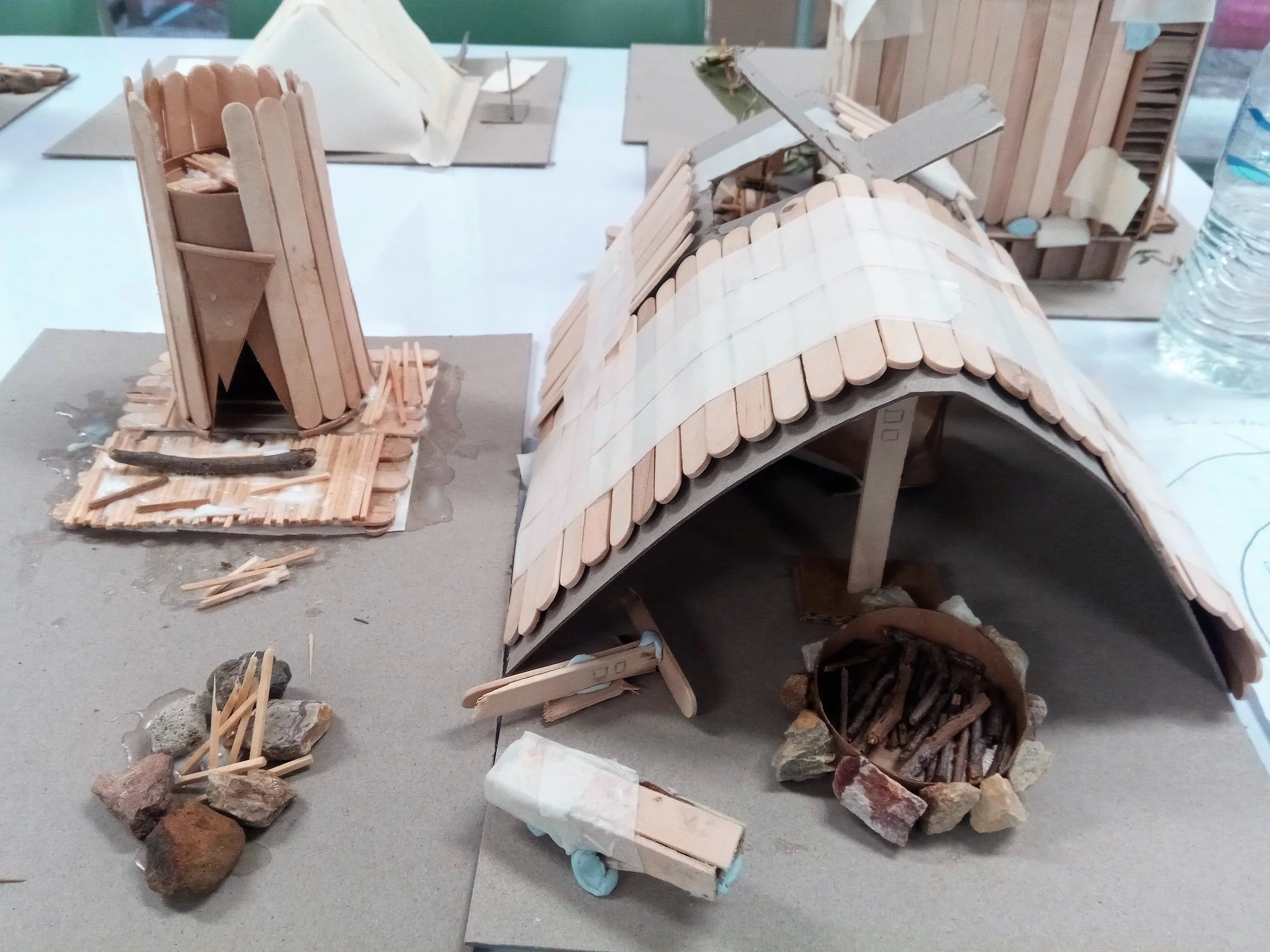
Curiosity Brisbane saw a selection of Queensland Schools paired with a Maker to realise their creative vision. Artist Nadine Schmoll collaborated with Leichhardt State School to connect with STEAM (science, technology, engineering, art and mathematics) for the project. The brief was to create a gunya (Aboriginal dwelling) and thereby imagine an alternative vision of Australia if European settlers had embraced the local knowledge and worked together with Aboriginal and Torres Strait Islander peoples upon their arrival.
Students were set a design challenge, created a prototype and built the structure, as well as using Minecraft to picture the landscape.
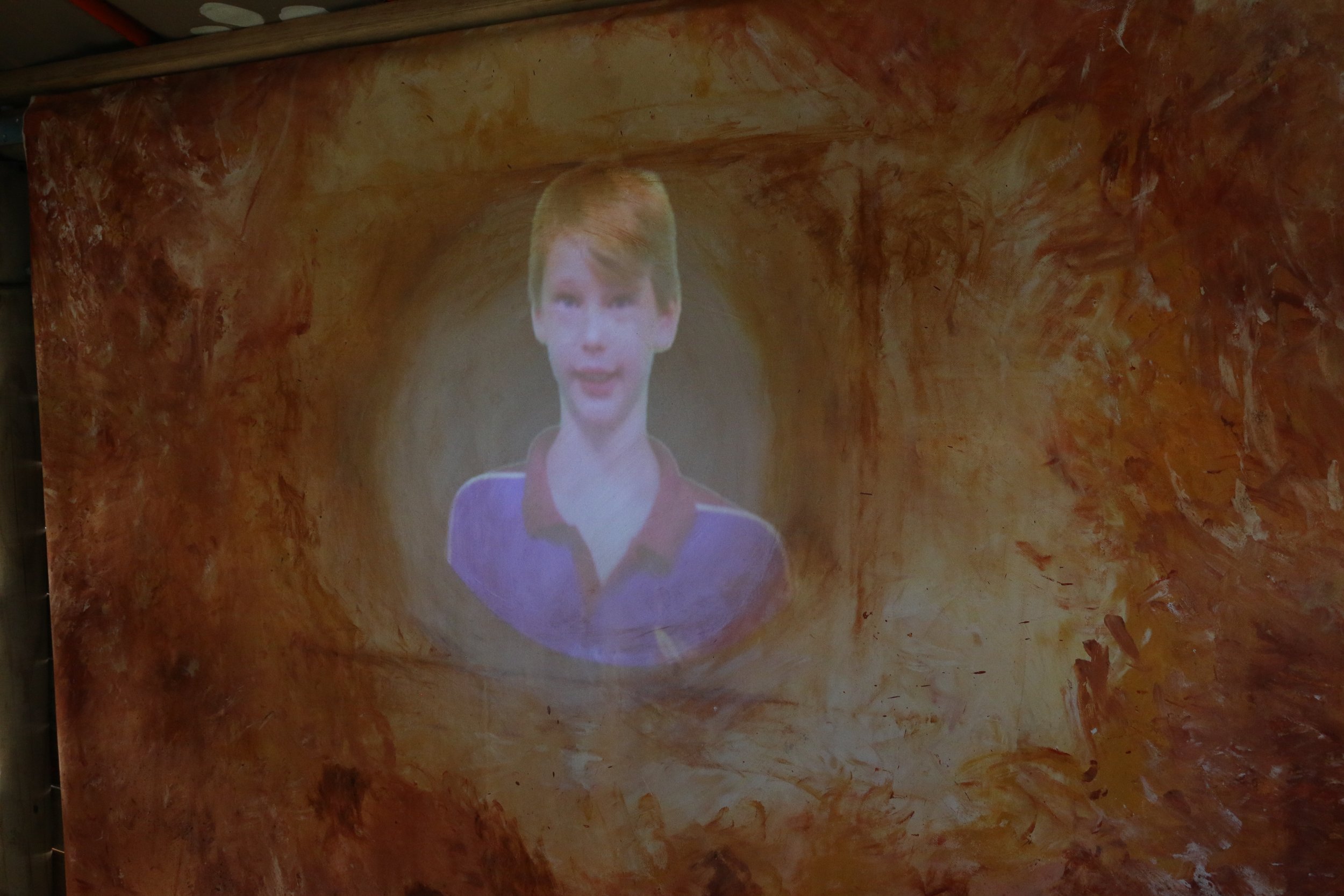
They also filmed and interviewed school community members about their vision for a better future.
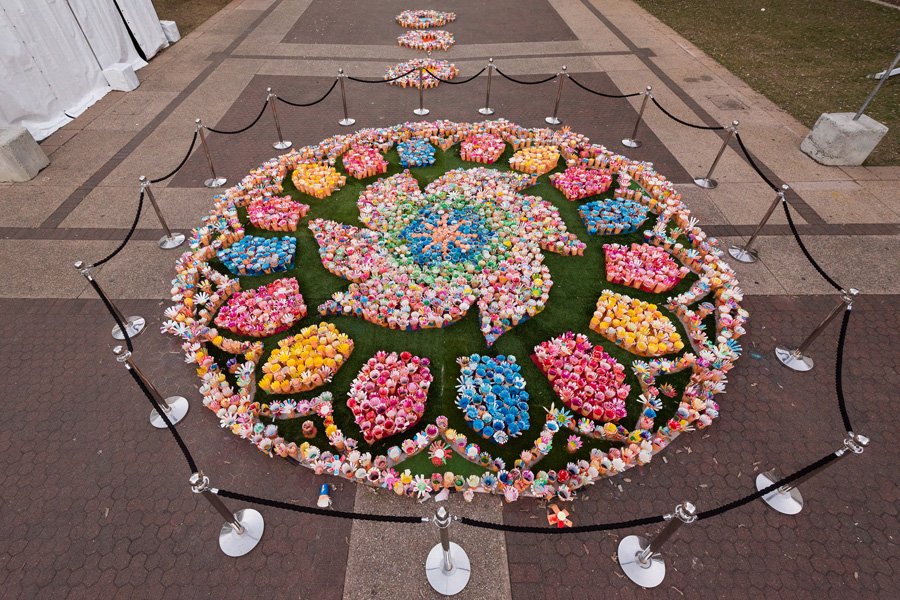
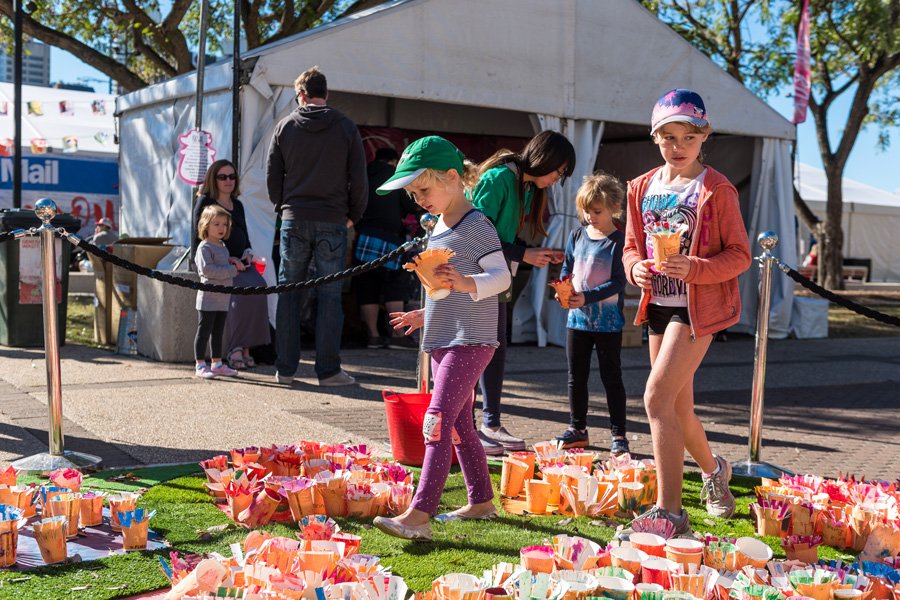
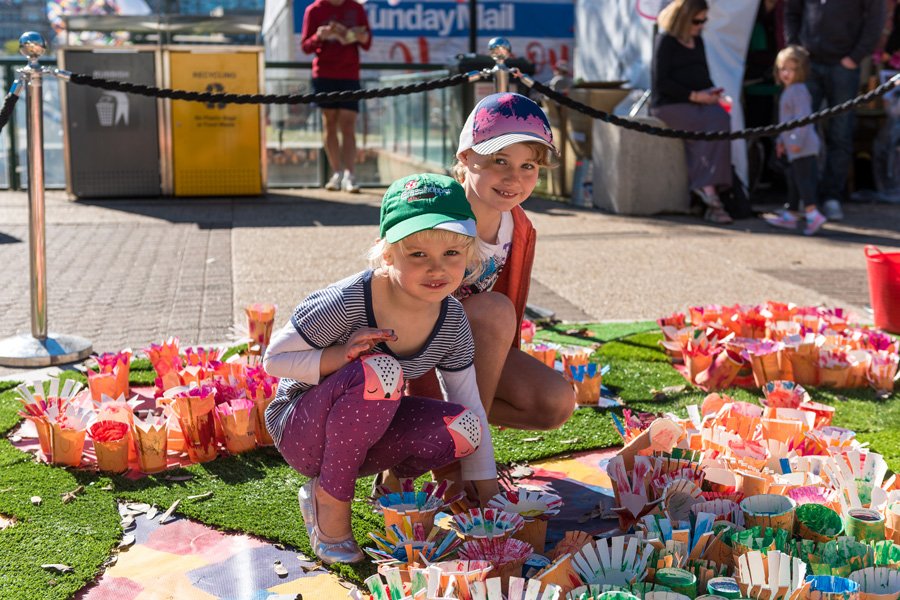
Flower rangoli: welcome mat
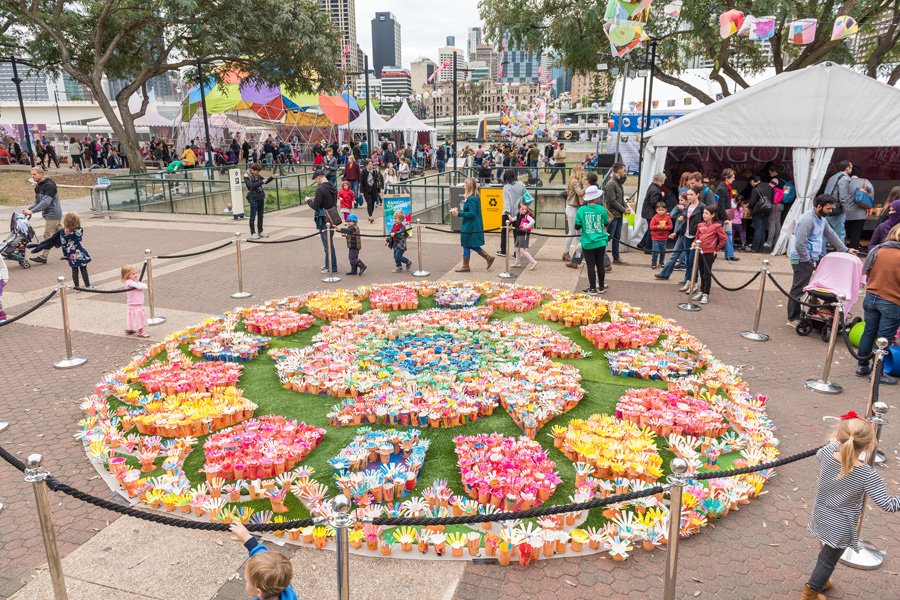
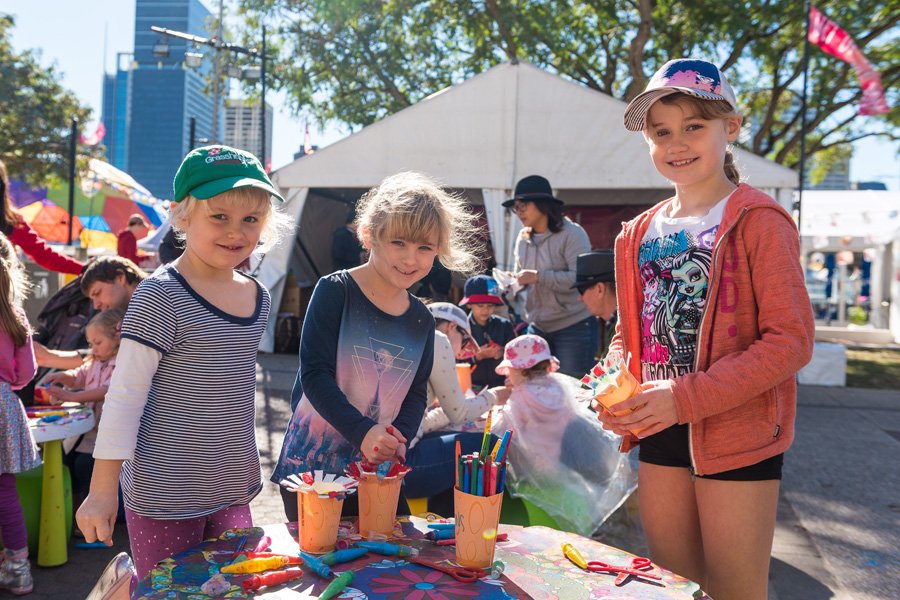
Across the 12 days of the Out of the Box Festival, artist Nadine Schmoll collaborated with over 7000 children to create a rangoli to welcome visitors to the South Bank cultural forecourt.
Participants reused paper cups, cutting and painting them into flowers before planting them in the installation.
Ecosciences Precinct:
Artist in Residence
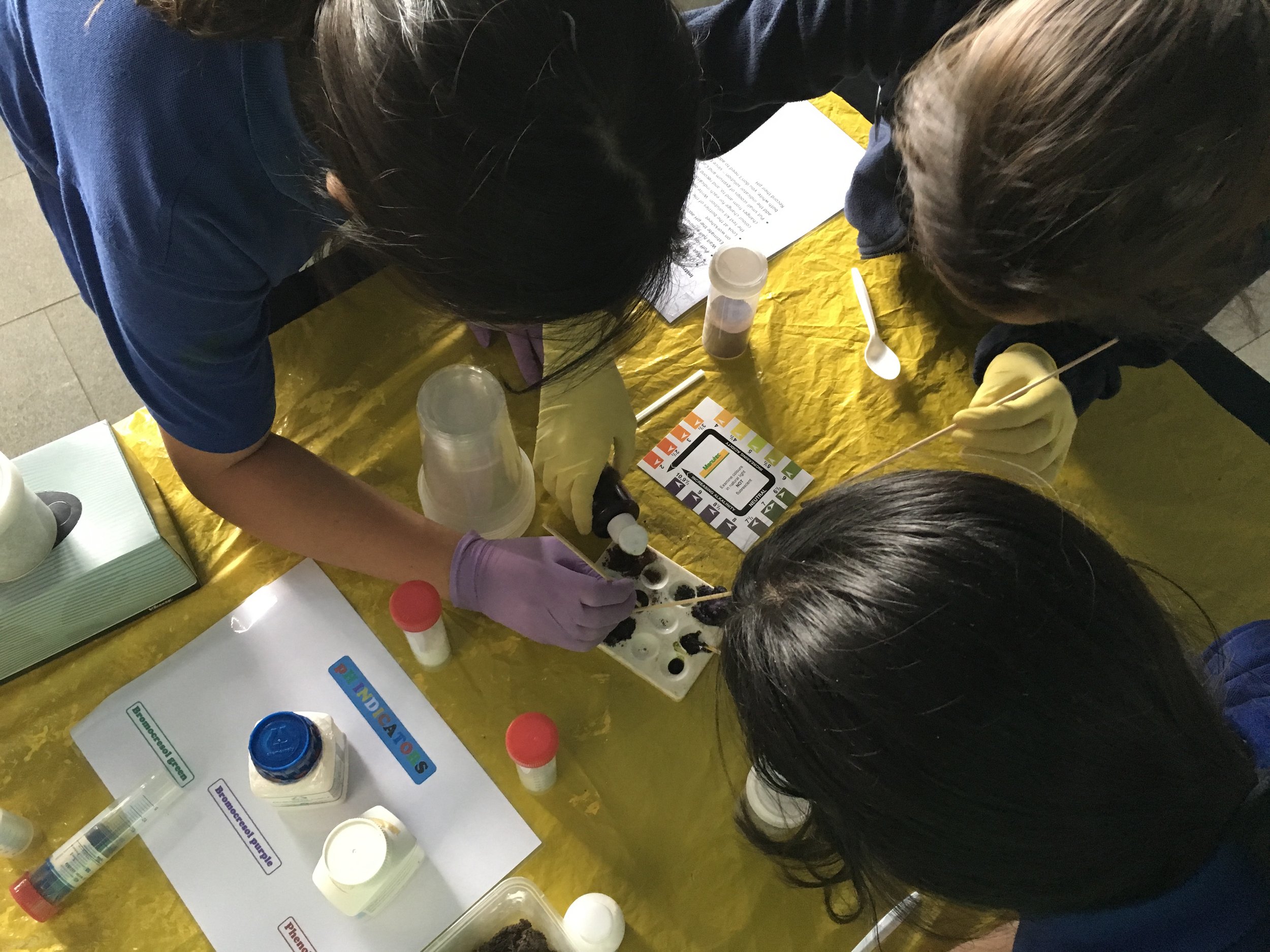
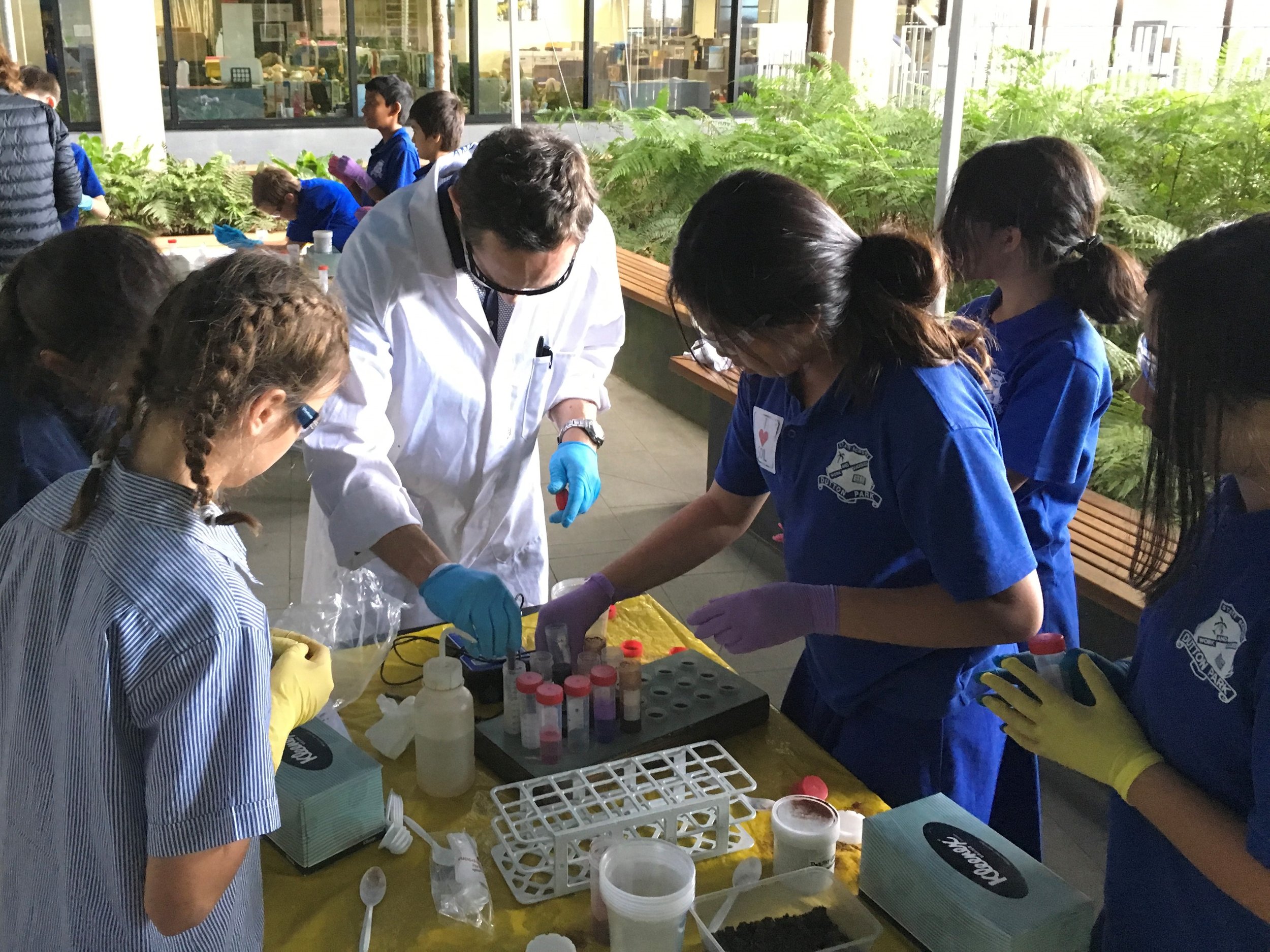
During her residency at the Department of Environment and Science (Ecosciences Precinct), Nadine collaborated with local primary school Dutton Park State School and soil and water scientists to deliver a series of art and science based workshops.
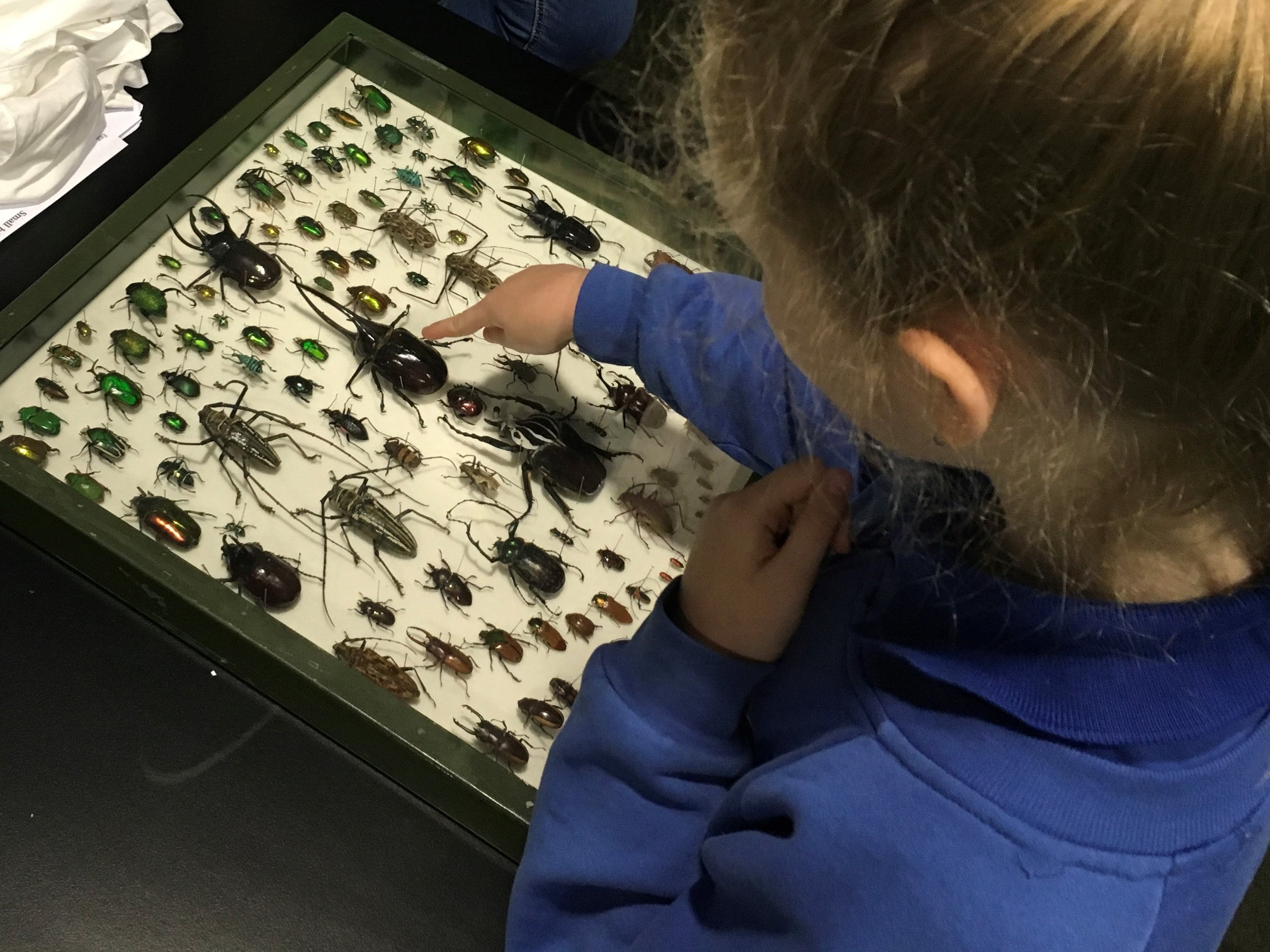
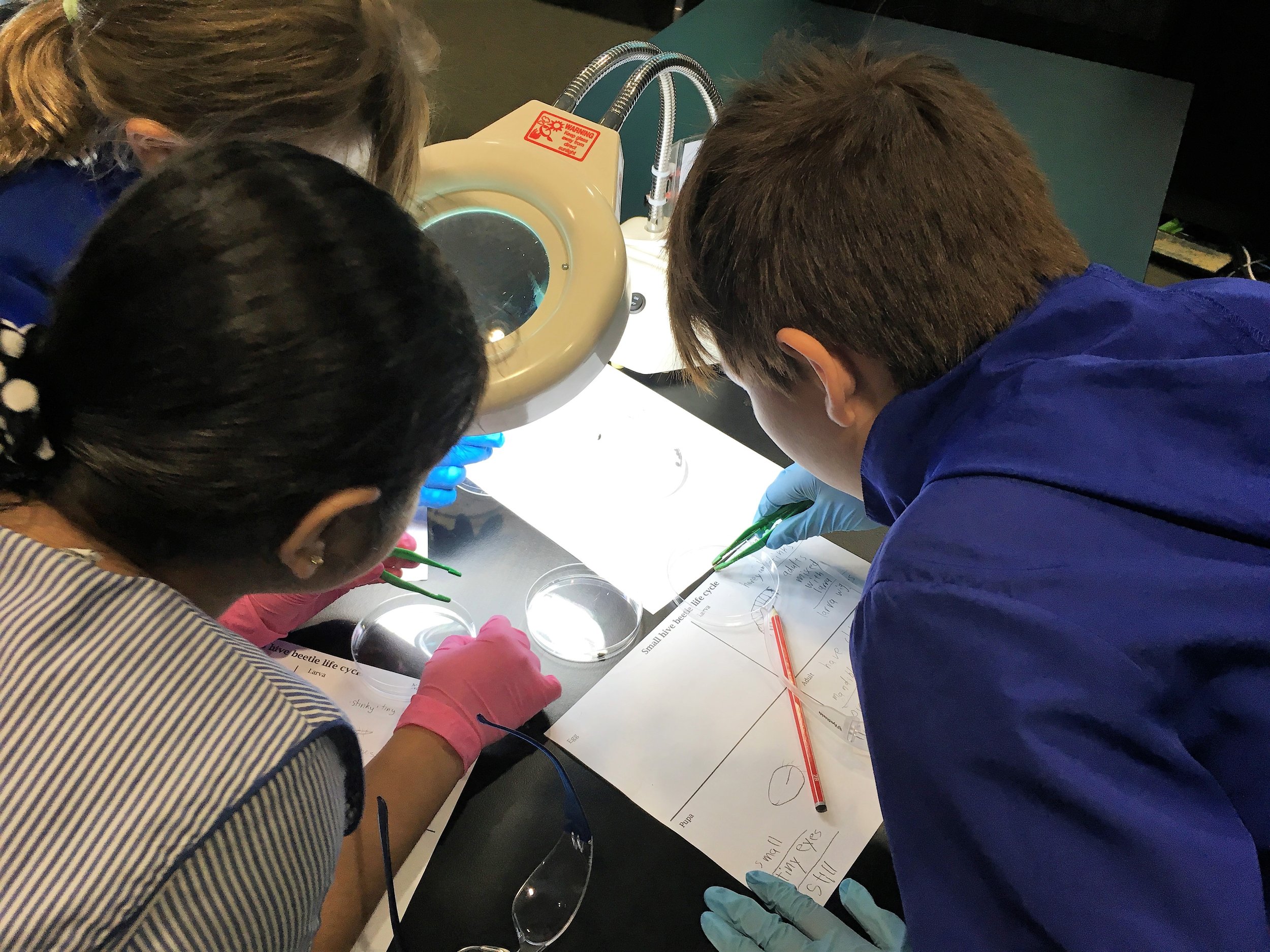
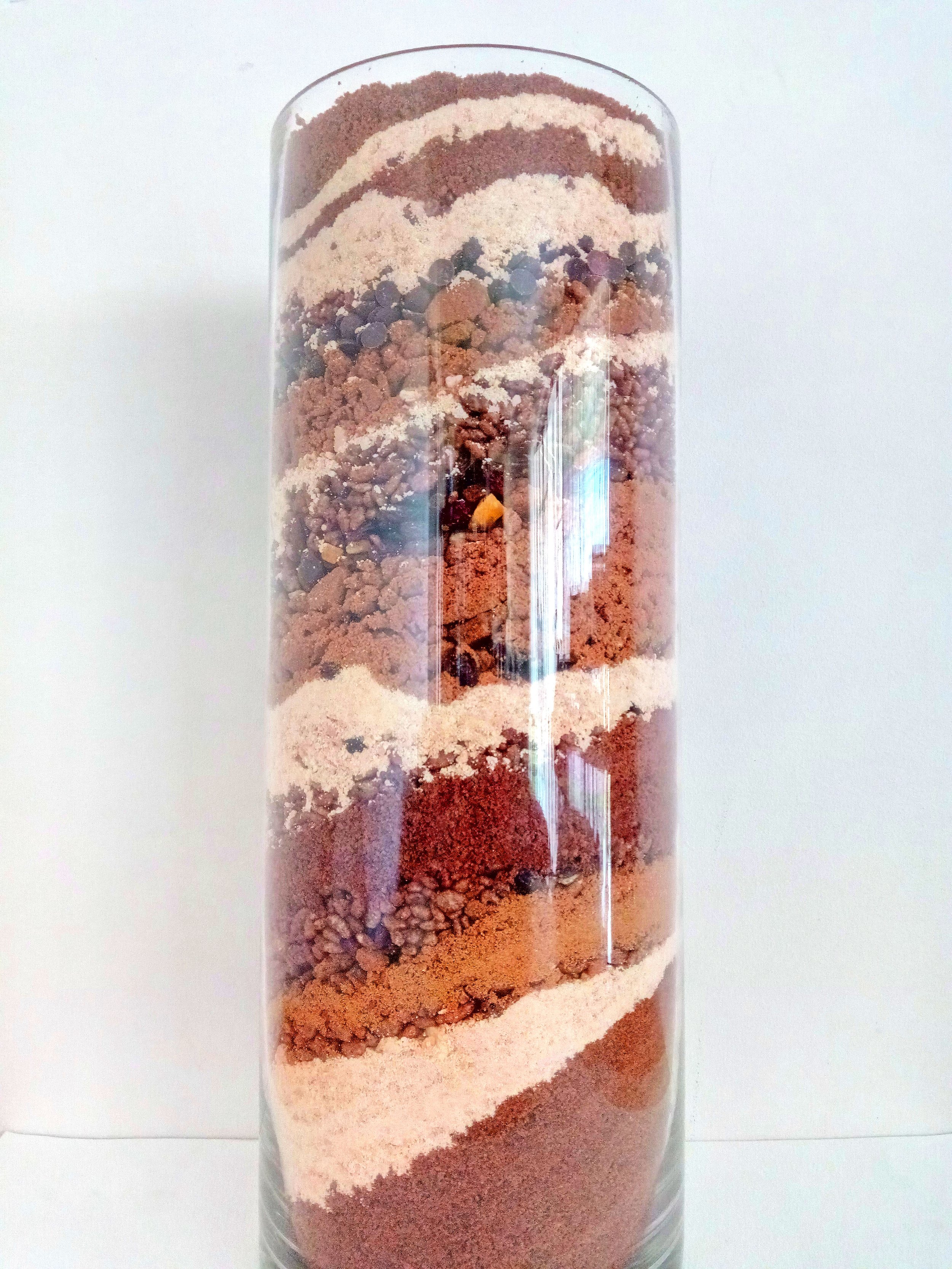
Workshops spanned chromatography, testing the soil pH, insects and french knitting using tshirt yarn and a performative artwork using edible soil.
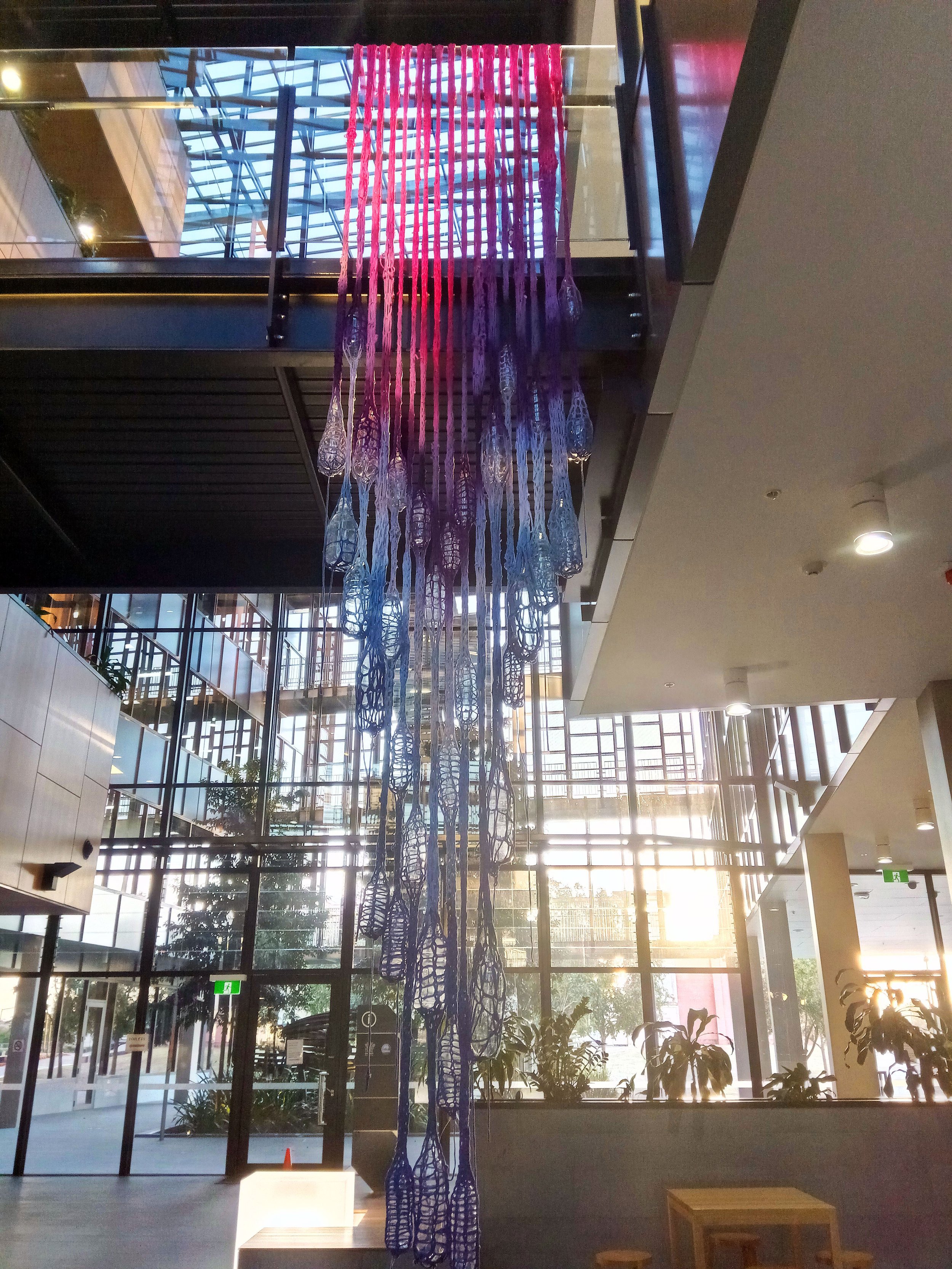
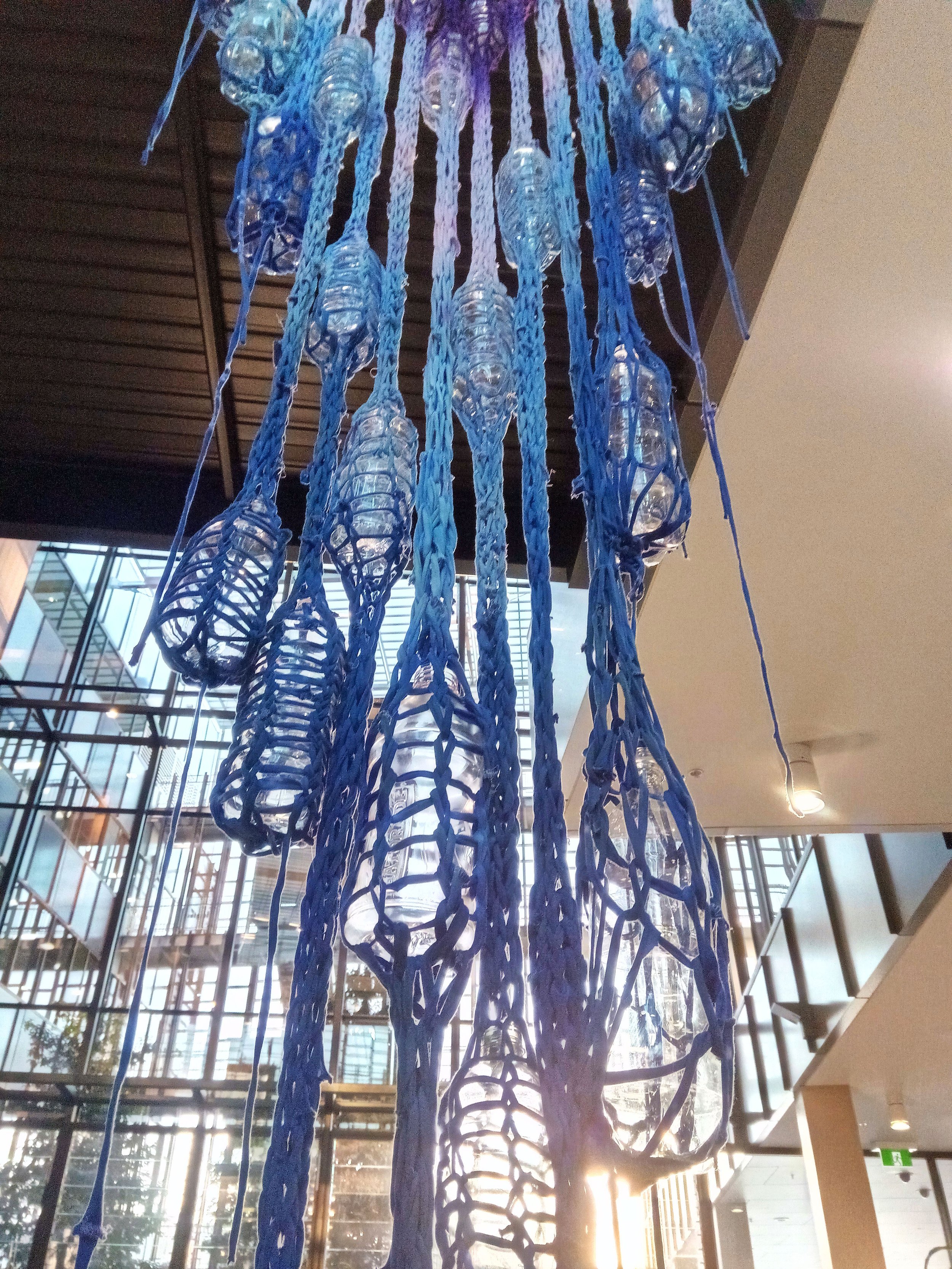
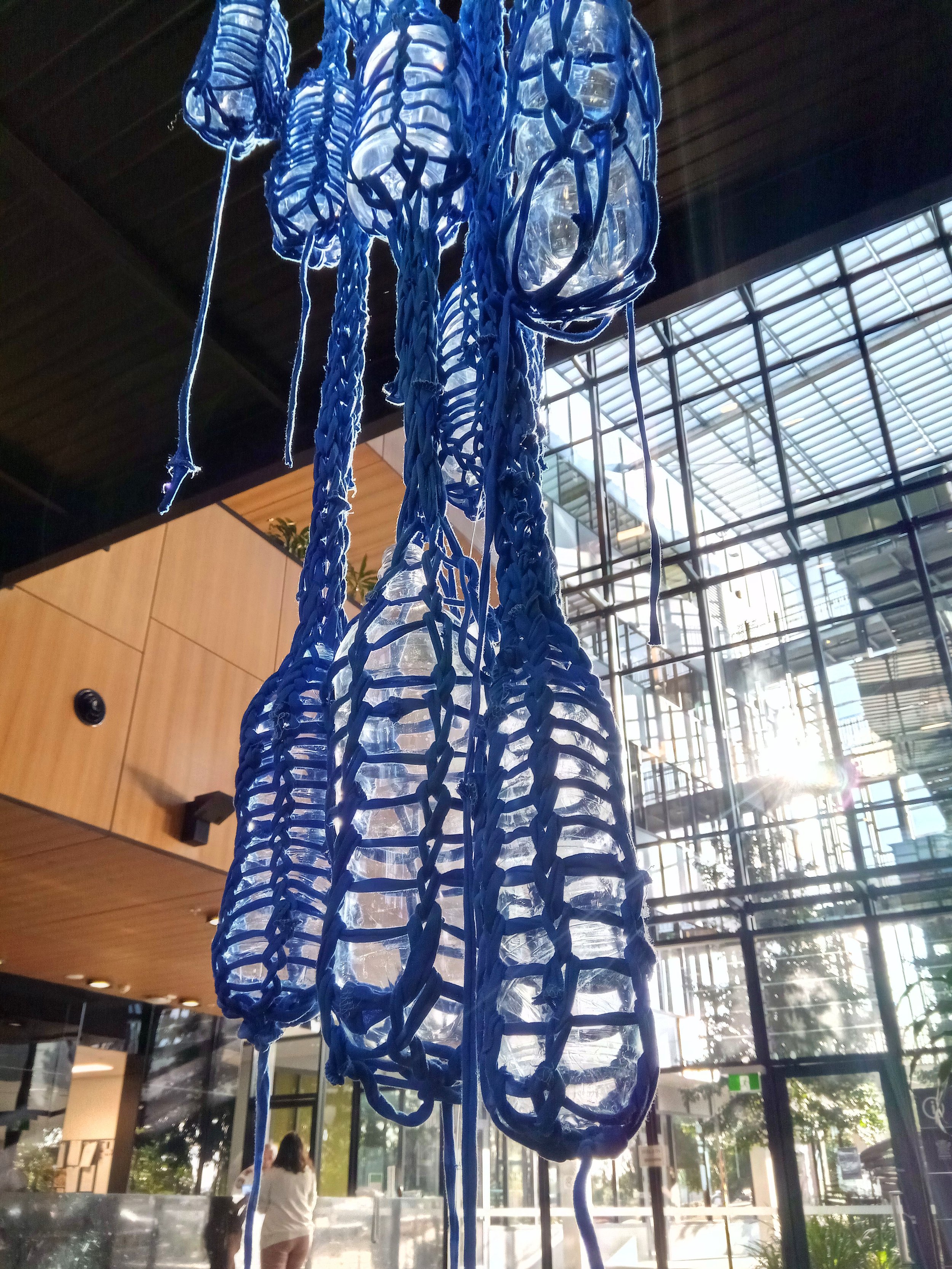
The residency culminated in a largescale installation of the french knitting, hand dyed in reference to the hydrangea, whose colours are determined by the soil pH.